


.webp)

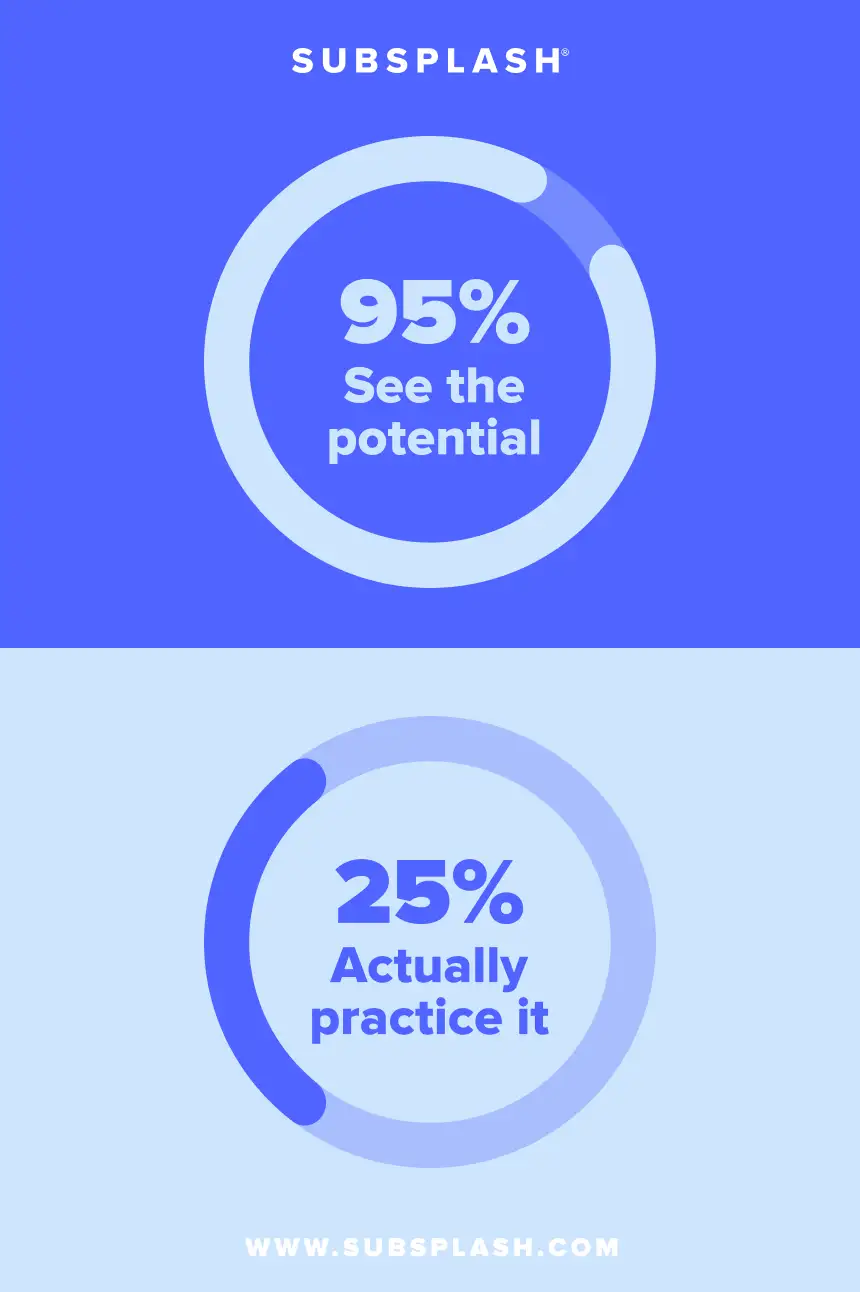


According to new research from Barna, 95% of church leaders report that digital tools open new ministry opportunities—yet only 25% describe their current toolset as “highly missional” in how they use this new technology to disciple people.
That means churches are using technology for greater efficiency, such as through giving, church apps, live streaming, and administrative support, but lag behind in using it for discipleship, worship, community building, and missional formation.
Closing that gap starts with church technology mission alignment: turning scattered digital tools into intentional paths for discipleship, so administrative tasks don’t overshadow spiritual goals.
Can church technology actually help fulfill a church’s mission, or does it just run the operations? For executive pastors and ministry leaders, answering that question means evaluating whether digital systems deepen real community connections or simply maintain weekly routines.
What “highly missional” technology use actually looks like
When leaders evaluate their digital footprint, success is often measured by surface metrics like website visits, video views, or live stream attendance. All good things!
However, a missional framework evaluates technology by how effectively it guides a person from passive observation to active discipleship. Aligning church technology with your mission occurs when every digital touchpoint serves as a pathway toward relationship, prayer, and spiritual growth on purpose, not by accident.
In practice, intentional church tech strategy removes administrative friction so leaders can invest more time into people. It connects Sunday morning visitors directly into midweek small groups, moves digital givers into active volunteers, and gives staff clear visibility into community needs. Every app, form, and message aligns around a shared target: forming disciples who love God and serve others.

Where most churches get stuck (fragmentation, not lack of enthusiasm)
Leaders who achieve this alignment design their software around clear steps. They look past simple attendance counts to track spiritual health indicators, such as
- Small group participation
- Consistent engagement in Scripture
- Baptisms
- Volunteer numbers
- Participation in the life of the church
When digital systems work together with clarity, technology becomes a quiet engine supporting your primary calling.
The primary obstacle to church technology mission alignment is rarely a lack of enthusiasm among church leaders. Most executive pastors and communications directors eagerly adopt tools that promise to solve immediate problems.
Over time, however, churches accumulate a patchwork stack of standalone platforms: one program for online giving, another for group messaging, a separate database for member management, and an isolated media player for live streaming.
This approach creates data silos across your organization. When systems operate independently, your staff must manually transfer information between software, export spreadsheets, and update multiple records. Critical details slip through the cracks, leaving first-time guests without follow-up and long-time members feeling overlooked during life transitions.
This technical friction extracts a heavy operational tax. Staff members spend valuable hours managing administrative tasks on computer screens rather than building face-to-face relationships with people. Managing separate subscription fees and fragmented user accounts drains financial resources that could directly support outreach and community ministry.
A three-question self-check
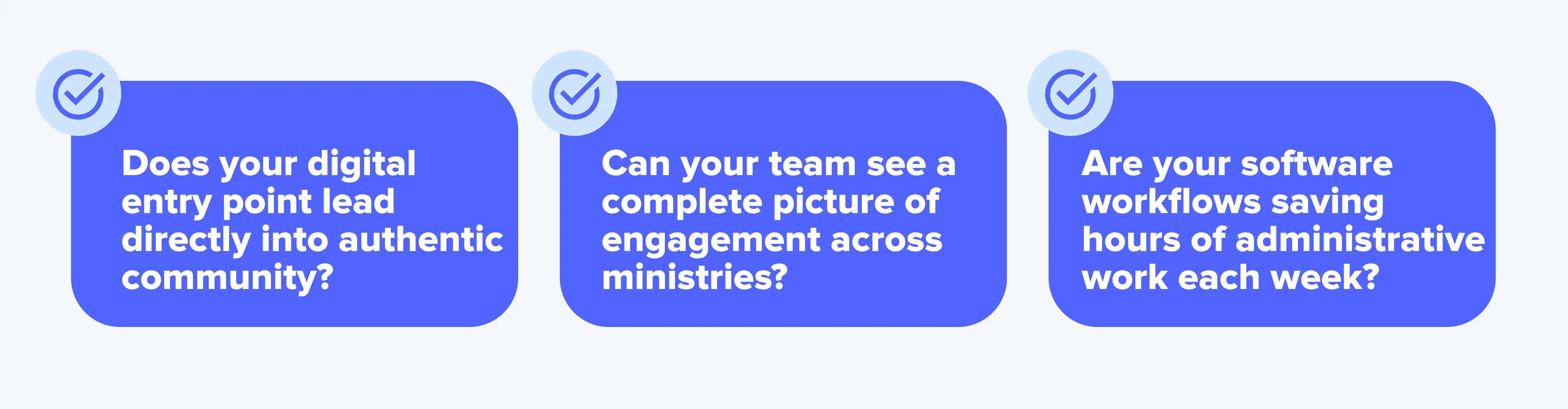
To determine whether your current systems support your long-term ministry goals, step back and evaluate your tech stack. Executive leaders can run this simple three-question self-check for aligning your church technology with your mission:
- Does your digital entry point lead directly into authentic community?
Examine what happens after someone interacts with your church online. When a visitor fills out a digital connect card or watches a sermon stream, does your software guide them toward a small group, a volunteer team, or a personal follow-up call within 48–72 hours? If your digital tools function only as broadcast channels without clear next steps, your tech stack remains operational rather than missional.
- Can your team see a complete picture of engagement across ministries?
Consider how easily your leadership team tracks individual involvement. Can your staff quickly see if a faithful giver has stopped attending, or if a small group participant has expressed interest in serving? When attendance, giving, and communication records live in separate platforms, leaders lack the clear visibility needed to provide proactive pastoral care.
- Are your software workflows saving hours of administrative work each week?
Evaluate the time your staff spends managing tech platforms versus ministering to people. If your team spends multiple hours each week manually re-keying data, exporting CSV files, or coordinating disconnected apps, your tools are creating friction. Effective ministry software automates routine administrative tasks so your team can focus on personal discipleship.
Why consolidation supports mission, not just budget
Solving system fragmentation requires moving away from piecemeal software choices toward platform consolidation. When your church management system shares a single database with your mobile app, online giving, and website, administrative walls disappear. A donation made on Sunday automatically updates the member’s profile in real time. A volunteer sign-up on your app immediately alerts the ministry leader and adds the individual to an automated follow-up process.
While unifying your tech stack undeniably reduces software licensing costs and simplifies administrative billing, the true value of consolidation lies in mission clarity. A unified system brings all your ministry data, media, giving, and communication tools into one shared home. This unified data flow transforms how church leaders serve their communities. Rather than guessing at engagement levels or wrestling with spreadsheet exports, leaders gain actionable clarity into community health.
For a deeper look into structuring your church management setup, explore our complete guide to Church Management Software (ChMS).
How Subsplash keeps every tool pointed at the same mission
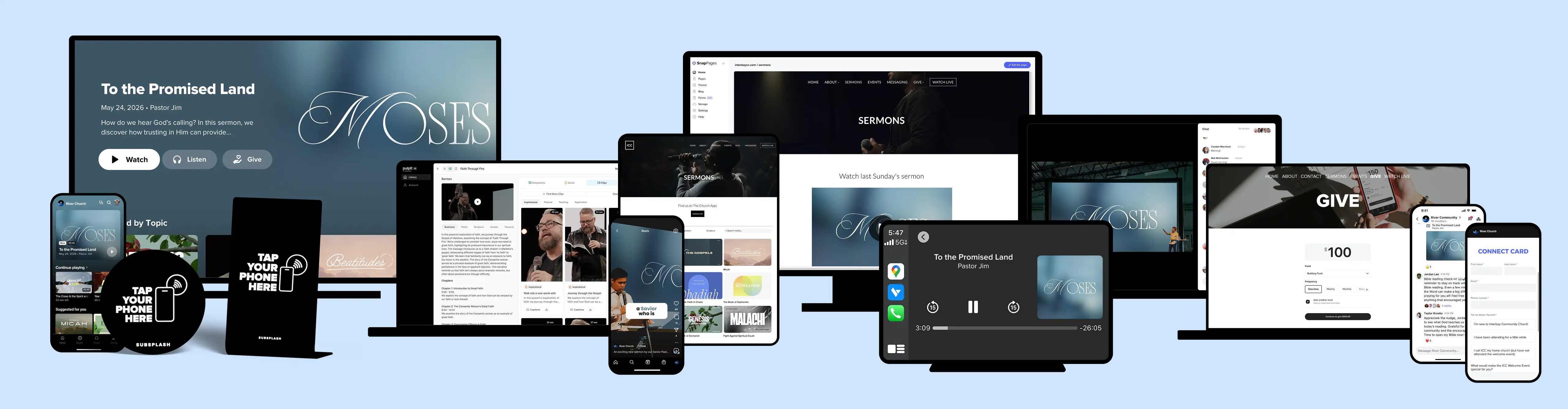
At Subsplash, we build technology specifically to help leaders know, engage, and grow their communities. Rather than forcing staff to manage disconnected point solutions, Subsplash One provides a unified platform where mobile apps, live streaming, media hosting, giving, and church management operate from a single dashboard. This single-platform approach ensures every digital interaction points back toward your core ministry strategy.
To help leaders answer the self-check questions with confidence, Subsplash integrates data tools like Trends AI. Trends AI analyzes engagement patterns across giving, group participation, and service attendance, surfacing meaningful insights without requiring manual data analysis. Leaders can quickly identify who is taking next steps in their faith journey and reach out to individuals who may need extra pastoral care.
In addition, church leaders can continue unlocking the power of AI for effective church leadership through dedicated tools like Pulpit AI, which converts a single Sunday sermon into devotionals, group discussion guides, and social media clips in minutes.
By keeping your media, people data, and discipleship workflows aligned within one hub, your church spends less time managing software and more time discipling your people. Technology should clear the path for life-changing relationships and spiritual growth across your entire congregation.
[.blog-contact-cta]Schedule a free demo today[.blog-contact-cta] and discover how your church can utilize the best church tech to grow your mission.


%20for%20Ministries.webp)

