



When a senior pastor announces a retirement or transition, church boards face an intense season of prayer, search committee meetings, and candidate vetting. Yet during these critical months, a church’s day-to-day operations can quietly fray if the underlying digital systems rely on a single person.
Demographic shifts across North America make this scenario increasingly common. Research from Barna Group shows that the average senior pastor in the United States is now 58 years old, up from 44 in the early 1990s, with only 16% of Protestant senior pastors under age 40.
Most churches will navigate a leadership transition in the next decade, yet many still operate without a digital foundation for a successful handoff. Incorporating church succession planning technology into your strategic vision ensures your congregation stays connected, financially stable, and engaged throughout the search. Barna Research identifies clear, consistent communication as the single most critical factor in a smooth transition, holding your ministry’s digital life together when leadership changes occur.
While digital tools cannot replace pastoral care, governance, and spiritual discernment, church succession planning technology holds your ministry’s digital life together during these important seasons of transition.
The underlying infrastructure that provides stability
Picture a board chair receiving news on a Tuesday evening that their lead pastor of 22 years plans to retire in 18 months. The board does not currently have a finalized pastoral succession plan.
What they do have, however, is a digital platform storing three years of recurring giving data, active small group communication channels, and an organized media archive of every sermon preached from their pulpit. When leadership changes arrive, that underlying infrastructure provides the stability a church needs to walk into its next season with confidence.
The succession crisis, by the numbers
Navigating a leadership shift in ministry is rarely simple, but the scope of upcoming pastoral transitions across North America makes this conversation urgent. The numbers behind today’s demographic shifts highlight why every board and executive team must prepare early.
The gap between necessity and preparation
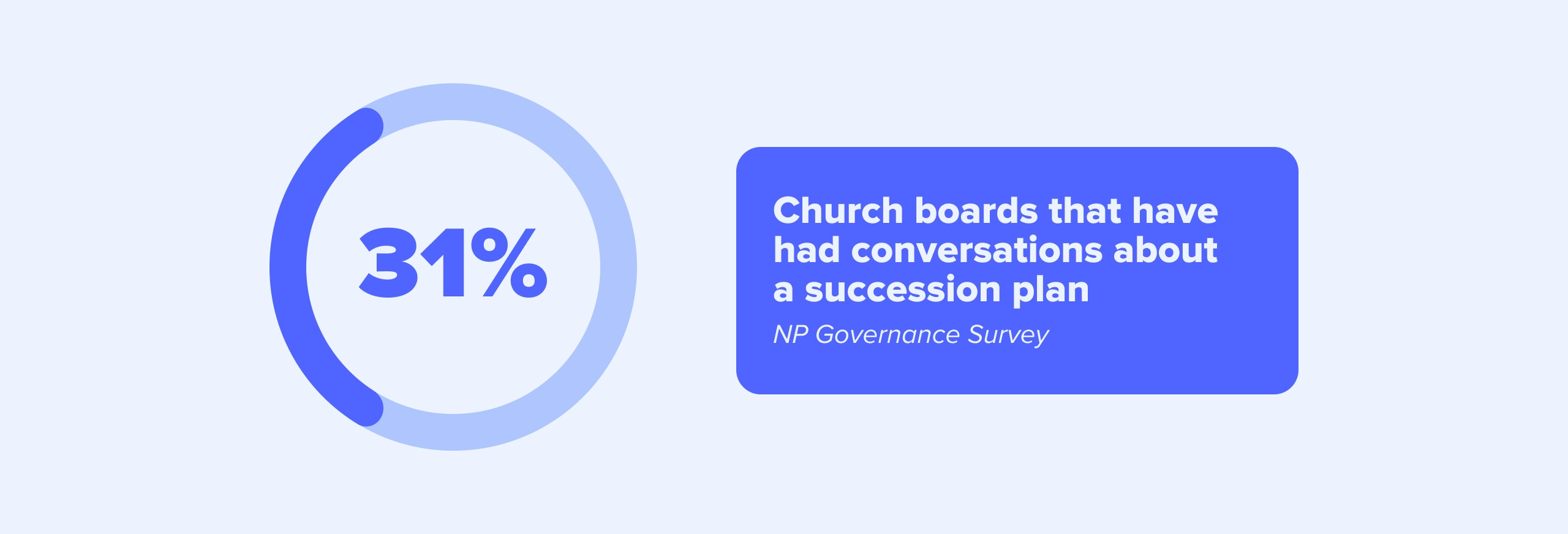
Despite the demographic realities, only 31% of church boards have had conversations about a succession plan. And when a transition begins without preparation, the timeline often stretches longer than leadership anticipates. Standard pastor searches take 12–18 months, while smaller churches without established leadership pipelines can take three years or more to hire a new lead pastor.
The cost of an unplanned transition
In their book Next: Pastoral Succession That Works, authors William Vanderbloemen and Warren Bird remind church leaders that every pastor is ultimately an interim pastor. Planned transitions consistently yield healthier outcomes for the outgoing pastor, the incoming leader, and the broader congregation. Conversely, forced or abrupt transitions frequently result in declining attendance, disrupted staff cultures, and drops in giving velocity during the search period.
Proper preparation is fundamentally a matter of stewardship. A smooth church leadership handoff requires protecting the health, unity, and ongoing ministry work of the congregation throughout the waiting period.
Where churches go quiet during a pastoral transition
Succession failures rarely happen in a single dramatic moment. More often, they unfold as a slow erosion of connection, momentum, and trust while leadership focus shifts toward search committees and candidate interviews. Identifying where a church’s digital presence begins to fray allows leadership to put proper support systems in place.
1. Giving velocity drops during seasons of uncertainty
Financial generosity relies heavily on trust and clear vision. When a lead pastor announces an exit, donors naturally wonder about the future direction of the church. If a ministry relies primarily on physical offering plates or manual online gifts, giving often dips as attendance fluctuates.
Implementing dedicated pastoral transition technology like in-app giving and recurring giving helps stabilize monthly tithes. When congregants can give with just a few clicks in an app, or set up automated recurring gifts through Subsplash Giving, their financial support continues uninterrupted, giving the search committee room to operate without financial strain.
2. Sermon continuity breaks down
An outgoing pastor’s body of teaching represents years of discipleship, biblical context, and spiritual history. In many churches, however, sermon audio and video remain scattered across personal drives, third-party video hosts, or unorganized video accounts. When the pastor leaves, that teaching library can easily become fragmented or lost.
Using centralized church technology during leadership transition seasons ensures your media remains organized and fully owned by the church. With Subsplash Media, your entire audio and video archive stays structured, searchable, and accessible on your app and website. The discipleship investment made over decades continues serving the congregation well after the pastor steps down.
3. Member engagement quietly falls off
During a search season, staff members naturally focus their time on transition logistics, board meetings, and candidate vetting. As a result, subtle drops in congregational engagement can easily go unnoticed. A volunteer steps back from serving, a regular family misses three consecutive weeks, or a small group quietly dissolves.
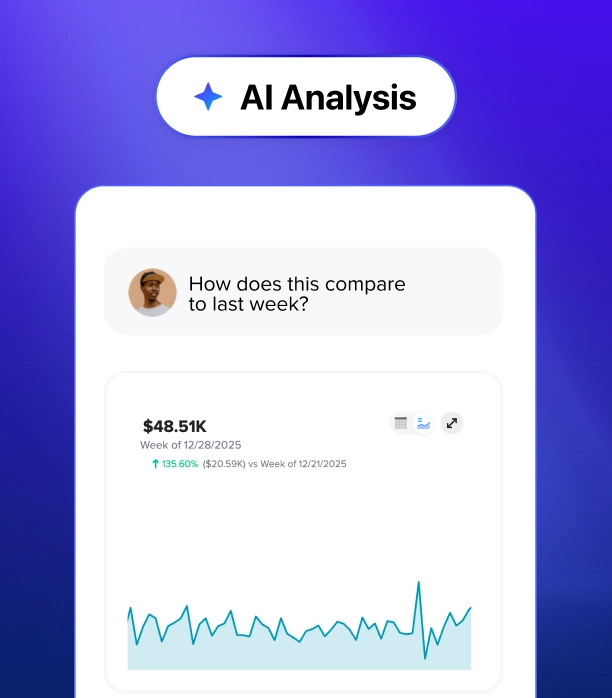
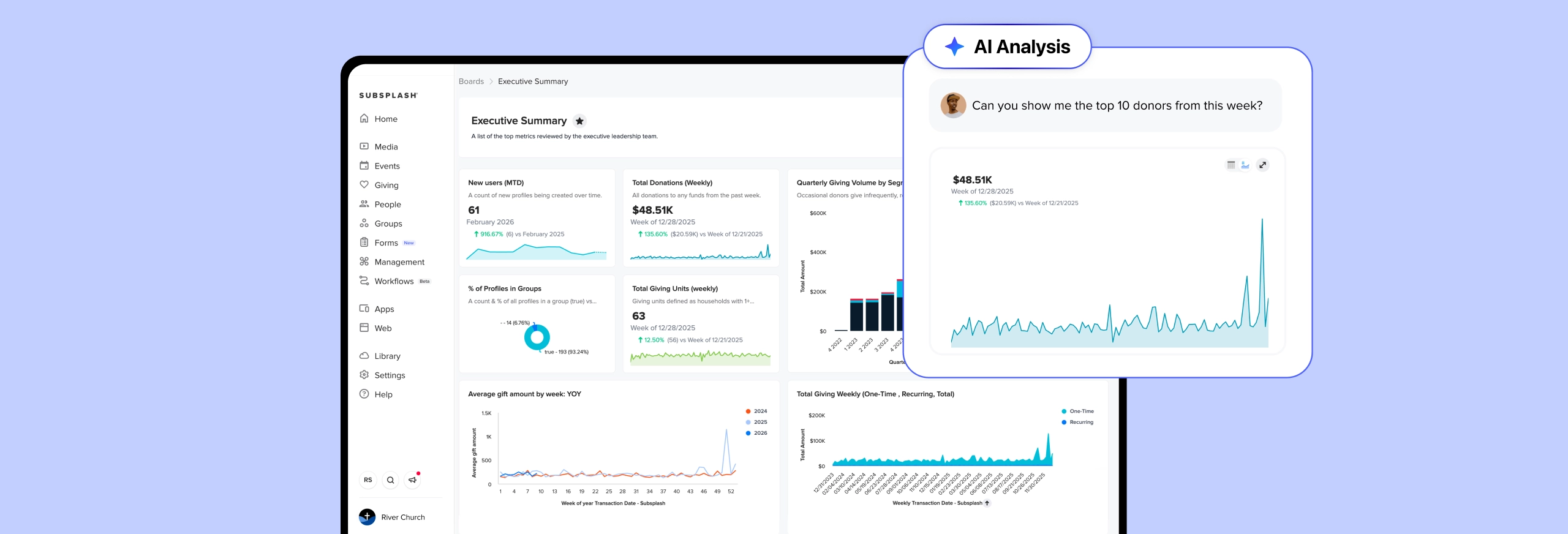
This is where specialized pastor retirement planning church tech provides essential visibility. Features like Trends AI give church leadership a real-time view of attendance patterns, app activity, and participation health. Instead of waiting for a decline in active members, leaders can see engagement shifts immediately and offer intentional care.
4. Communication becomes inconsistent
In many congregations, the lead pastor serves as the primary communicator. When that voice steps back from the pulpit, regular updates often slow down. Without clear information, speculation fills the void.
A clear church communication strategy relies on established channels that do not depend on a single person, such as reliable ministry workflows. Maintaining an active mobile app, sending regular push notifications, and publishing regular updates ensures your congregation hears directly from elders and board members throughout the transition.
What the incoming pastor inherits
A pastoral transition plan is not merely a survival exercise by a church board. It is an opportunity to set up the next leader with the context and operational clarity they need from day one.
Multi-year giving data and financial context
A new pastor stepping into leadership needs an accurate picture of the church’s financial health. Multi-year trends from Subsplash Giving reveal giving patterns, seasonal fluctuations, and overall generosity habits across the congregation. Rather than relying on guesswork or static spreadsheets, the new leader receives reliable operational data.
Real-time member engagement health
Stepping into a new pulpit means learning who makes up the congregation. Access to engagement insights through Trends AI helps a new pastor quickly understand:
- which small groups and ministries are actively growing
- which serving teams have strong volunteer momentum
- where engagement has softened so pastoral care can be prioritized
This visibility accelerates the onboarding process, allowing the incoming leader to focus their energy where care and support are needed most.
A rich archive of congregational culture
Every church possesses a distinct theological history and vocabulary. A well-maintained media archive allows an incoming pastor to review previous teaching series, understand how Scripture has been presented to the church, and honor the foundation laid by previous leaders.
Platform stability that reassures the church
74% of Christians want a digital resource hub from their church. When a church’s underlying digital infrastructure remains stable—when the app opens reliably, sermon livestreams run smoothly, and giving processes work without friction—the congregation experiences a sense of continuity. This operational reliability reassures members that the ministry can maintain digital discipleship and community care.
Starting the technology conversation before you need it
You do not need to be actively navigating a pastoral retirement to begin preparing your digital systems. Taking proactive steps today builds resilience into your church’s operational structure.
Step 1: Audit account ownership and administrative access
One of the most common operational oversights during a church leadership handoff involves account ownership. Ensure that your church—rather than an individual pastor, staff member, or volunteer—holds primary administrative ownership of:
- Your mobile app dashboard and developer accounts.
- Your online giving platform and merchant processing services.
- Your streaming host, website domain, and media storage databases.
If a key team member steps away tomorrow, your administrative team should retain complete access to all digital tools without delay or recovery hurdles.
Step 2: Establish recurring giving as a core practice
Consistently encouraging your congregation to set up automated recurring tithes creates financial stability that protects your budget during future search seasons.
But building a reliable recurring giving base takes time, making it essential to establish long before a pastoral transition arrives. During seasons of leadership change, attendance often fluctuates, which can cause manual offerings and one-off digital gifts to dip unexpectedly.
With recurring giving tools like Subsplash Giving, you help facilitate financial stability that protects your operational budget during search seasons. This steady stream of generosity ensures that staff salaries, ongoing ministries, and search committee operations remain fully funded without putting financial strain on your church. Developing a culture of faithful recurring stewardship provides a reliable foundation so your church can focus on spiritual discernment rather than budget shortfalls.
Step 3: Centralize your church platforms to one location
Managing a fragmented stack of disconnected software creates a complex tax on staff time and obscures congregational data. During a leadership transition, managing separate logins for giving, media, website, groups, and ChMS leads to data gaps where members can fall through the cracks.
Unifying your tools on a single platform like Subsplash One brings your giving, custom app, media library, member management, data, and more under one roof. Using Subsplash as your comprehensive church succession planning technology ensures that critical information flows cleanly, staff workflows remain simple, and incoming leadership receives a clear, complete picture of church health.
And if your teaching archive is currently scattered across various personal hard drives, unlinked YouTube channels, or external cloud links, bring those assets into a single church-owned system. Using Subsplash Media ensures your library remains secure, organized, and available to your community regardless of staff changes!
Step 4: Establish consistent and clear workflows
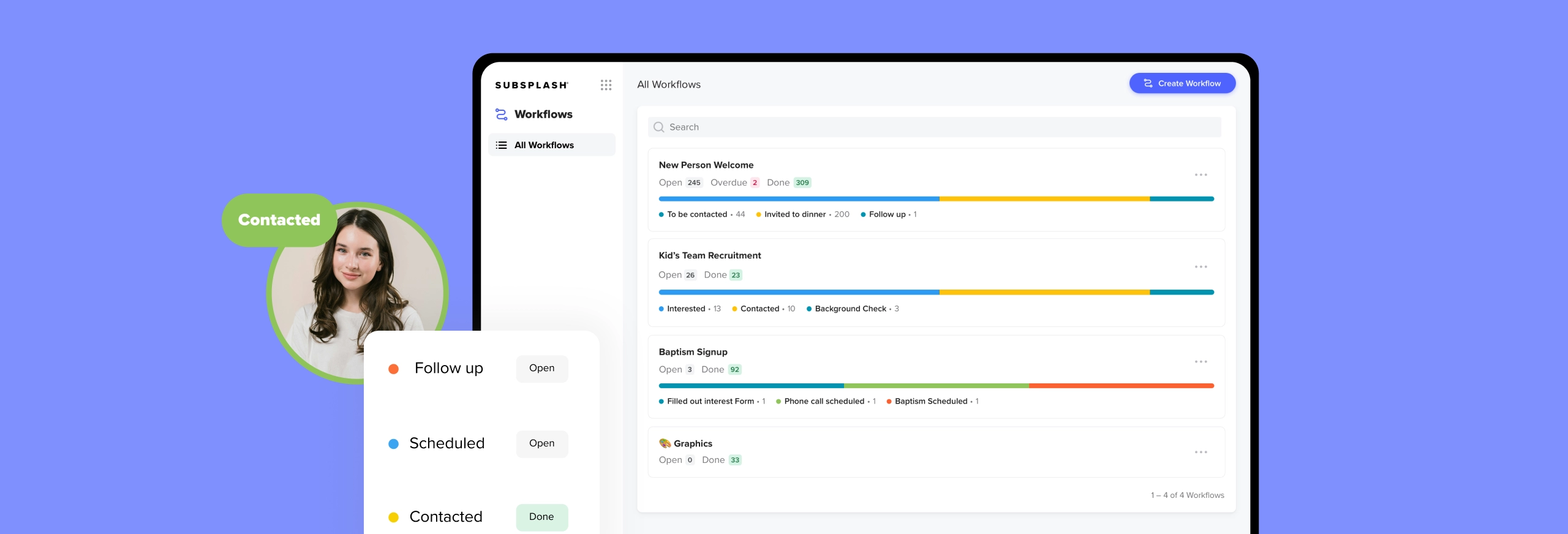
Implementing automated Subsplash Workflows turns multi-step processes like guest follow-up, baptism steps, and volunteer onboarding into clear, visual plans. With Subsplash Workflows, church staff can create, organize, and track every recurring process your church runs.
Subsplash Workflows is a visual work management tool built directly into the Subsplash Dashboard to organize and track recurring church processes. The feature uses a drag-and-drop Kanban board layout with customizable columns and cards to represent stages and specific tasks. Church teams can manage both people-focused processes, such as visitor follow-ups or volunteer training, and general operational projects like event planning.
New cards generate automatically whenever someone completes a connected Subsplash Form. Each card links directly to a member’s profile in your database, giving leaders instant access to essential contact information and engagement history. You can even configure step-based email automations to send personalized messages automatically when a card reaches a specific stage. Built-in checklists, due dates, and assignees allow staff and volunteers to stay aligned on specific responsibilities.
Leaders can build new workflows from scratch, select pre-made templates, or generate draft frameworks using an integrated AI tool. By bringing administrative tasks together in one central location, Workflows helps prevent dropped communications during important transitions and saves your team valuable ministry hours.
By setting up automated administrative tasks and team notifications before a transition occurs, your ministry maintains a consistent care standard regardless of staff changes. Your leadership team can see where every individual stands in their discipleship journey, ensuring no one falls through the cracks when staff attention is divided.
Step 5: Save hours of time with Pulpit AI
When a new lead pastor takes the pulpit, their top priority should be pastoring people, building relationships, and getting to know the congregation. However, modern ministry demands can force new leaders to spend hours navigating new technology, editing video clips, drafting small group questions, and managing digital publishing workflows.
Using Pulpit AI, your church can take a single Sunday message and automatically generate over 20 pieces of aligned discipleship resources. In just a few minutes, your team receives video clips for social media, small group discussion guides, daily devotionals, and email summaries drawn directly from the pastor’s sermon. This amplifies your new leader’s voice across your church app, website, and social channels, helping a new pastor remain focused on getting to know the congregation instead of getting hung up in technology or sermon multiplication.

Building a resilient foundation for the future
Pastors come and go, but the church’s mission endures. Embracing long-term stewardship means preparing your ministry to navigate leadership handoffs with grace, transparency, and administrative health.
While governance, prayer, and pastoral care form the heart of any leadership transition, using reliable church succession planning technology provides the stability your congregation needs along the way. By keeping your community connected, your giving consistent, and your media secure, you protect the unity of your church so you can welcome your next leader with confidence.
To see how Subsplash One provides the unified platform stability and member visibility your church needs through every leadership season, [.blog-contact-cta]let’s chat![.blog-contact-cta]