




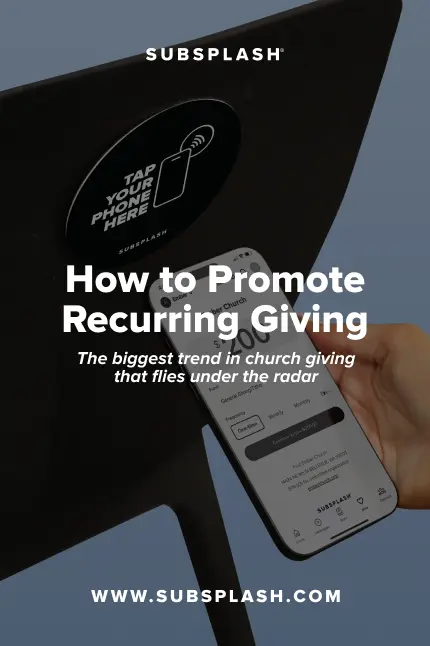
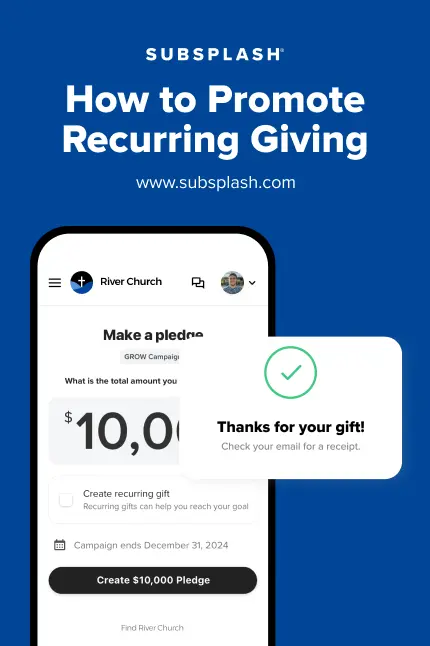


Church giving is evolving, and yet many leaders are overlooking one of the most powerful trends shaping generosity today: recurring donations. While one-time gifts will always have their place, recurring gifts are quietly becoming the backbone of sustainable ministry, offering both stability for churches and spiritual growth for donors.
Recurring donations are powerful because they make generosity reliable, predictable, and sustainable. When giving is simplified to recurring giving, your donations can grow and multiply! So why is this trend flying under the radar—and how can church leaders leverage it to strengthen their ministry long‑term?
New year recurring giving initiatives are crucial
In January, people are often looking to reset their budgets. And in fact, donors who use the recurring giving feature donate an average of 42% more each year than one-time givers!
That means now is the time to initiate recurring giving at your church, and encourage tithers to enroll in a simple, automated giving plan. By making the process easy and accessible—whether through your website, mobile app, or text-to-give options—you remove barriers and help members build generosity into their regular routines.
Why recurring giving matters more than ever
First, recurring giving offers stability. Unlike one-time gifts that fluctuate with seasons, special appeals, or life events, recurring gifts offer a steady flow of support. That helps church leaders plan—forecasting ministry budgets, staffing, outreach, and community programs—with confidence.
Second, recurring gifts reveal changing donor behavior, and recent data paints a compelling picture. 45% of Christian donors are already enrolled in a monthly giving program. And church members using recurring giving are 80% more likely to continue giving than one-time givers.
Third, churches that embrace recurring giving are twice as likely to report an increase in overall giving than those that don’t! And that’s before many churches fully lean into the trend—meaning the potential is even greater.
Fourth, recurring giving broadens the base of support. It isn’t just for “major donors.” Because recurring gifts tend to be smaller and more frequent, people who may never give large one-time offerings—but believe in faithful, regular stewardship—can participate consistently. Over time, many small recurring gifts add up to significant giving for the church.
Without recurring gifts, churches miss out
Despite the clear benefits, many churches still underuse recurring donations, as nearly half of churches have not yet adopted or actively encouraged recurring giving. That’s a major missed opportunity—especially when you consider that churches embracing recurring giving are more likely to grow financially.
Moreover, when churches neglect recurring giving, they often remain overly impacted by unpredictable giving seasons: holidays, occasional large gifts, special events. That makes long-term planning, ministry growth, and consistent outreach much harder.
Finally, many churches are missing younger donors—especially those digital natives who are most comfortable with online giving. Encouragingly, recent reports show that more Millennial & Gen Z donors are giving than ever before!
Digital giving now represents a growing share of total church donations, and approximately 50% of churchgoers prefer to donate with a card; most no longer carry cash or want to use checks. Recurring donations are the easiest way for younger or busier congregants to give consistently without needing to remember weekly offerings or write checks.
How to lead your church into this trend—without pressure or guilt
Despite the benefits, many church leaders focus heavily on one-time fundraising campaigns or big annual drives. Recurring giving often flies under the radar because it’s not been the status quo of church giving, or even possible, for the last one hundred years! Yet, the long-term impact is profound.
If you’re a church leader reading this, here’s how to make the most of recurring donations in a way that honors generosity, respects donors, and cultivates stewardship:
- Make it simple & accessible: Offer multiple easy ways for congregants to set up recurring gifts, from church apps to online giving portals. Highlight that recurring gifts can be automated and managed easily, so donors feel in control. Use an online giving platform or church management system that supports automatic recurring giving.
- Incorporate it into your teaching: A short sermon, Bible study, or teaching series on stewardship can naturally introduce the concept of recurring giving as part of faithful financial discipleship.
- Use consistent reminders: This January, include recurring giving options in emails, social media posts, push notifications, and text messages. Frequent, gentle reminders help people take action without feeling pressured.
- Communicate the benefits clearly: People give more faithfully when they understand what their giving supports. Share updates and stories about how recurring gifts are making a difference. Explain how recurring gifts help the church plan ahead and sustain ongoing ministries. Share stories of how consistent donations make a difference in real ministry outcomes. Encourage congregants to see recurring gifts not as a “requirement” but as a spiritual discipline — a faithful way to support ministry week after week, month after month.
- Invite, don’t pressure: Emphasize that recurring giving is a choice—one that many find spiritually fulfilling and financially manageable.
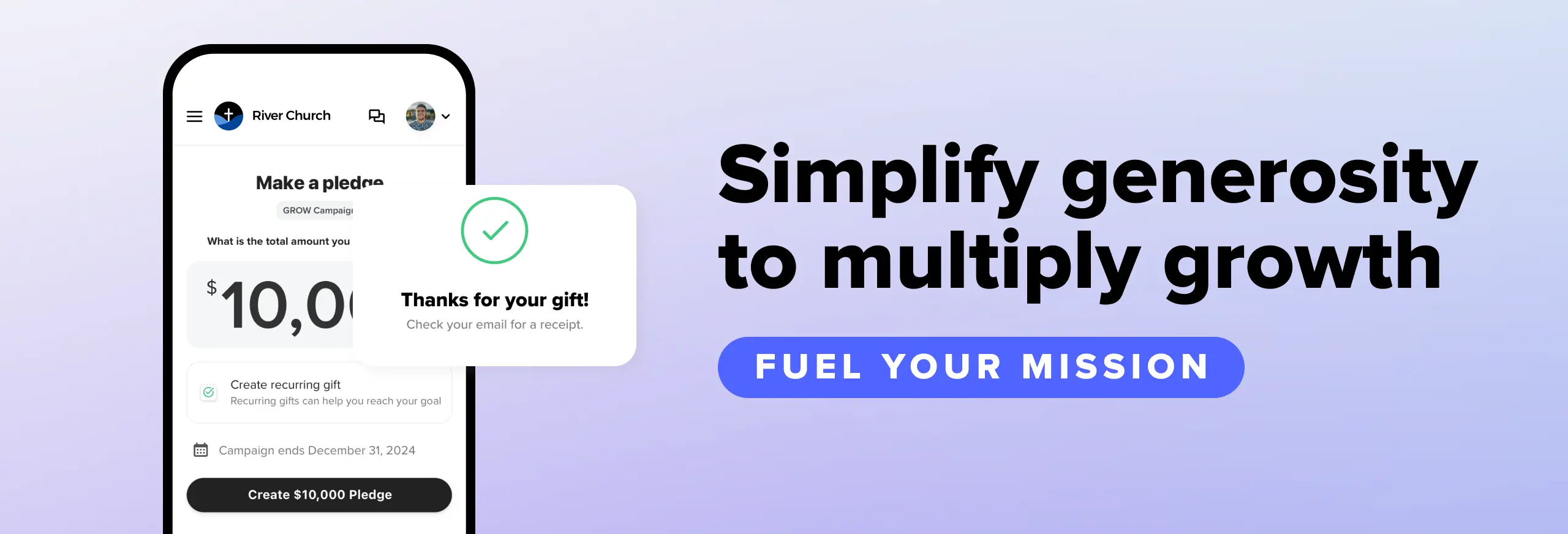
Why this is the “silent revolution” of church giving
The reality is that recurring donations are quietly reshaping church finances. Churches that embrace this trend will enjoy more predictable budgets, deeper engagement with donors, and the freedom to dream bigger in ministry.
For congregations brave enough to lean in, recurring gifts are turning sporadic generosity into steady support. They’re helping ministries budget wisely, plan for long‑term growth, and lean into strategic outreach rather than just reacting to financial uncertainty. By simplifying the act of giving, churches are removing friction and creating space for generosity to multiply.
If you lead a church—large or small—it’s time to ask: are we tapping into this growing trend? Or are we leaving unsteady giving and missed potential on the table?
Because the data is clear: recurring donations and recurring gifts aren’t just a nice option. They might just be the future of faithful church giving.
More resources you may find helpful:
- New Subsplash Giving tools: Simplify & multiply generosity
- Non-cash charitable donations: Unlock a new era of generosity for your ministry
- 15 powerful sermons on giving—inspiration for pastors
- The ultimate guide to Donor Advised Funds (DAF) for churches
- Are churches exempt from sales tax?
- Year-end strategies to maximize non-traditional donations
.webp)
.webp)
%20features%20for%20a%20thriving%20church.webp)
.webp)
.webp)
.webp)