The 6 shifts of the modern church

April 28, 2026

If you feel like the ground is shifting beneath your feet, you aren’t alone. Technology has advanced more in recent years than in the previous generations—and the Church has felt every bit of that acceleration. 

And over the last fifteen years, the rhythms of how your community connects, shares the Gospel, and practices generosity have been completely rewritten.

For many churches, this isn’t just a change in technology—it’s changing how they reach and connect with their community. 

Digital tools like websites and social media are no longer optional extras; they’re essential assets. Today, live streaming and hybrid services are normal rhythms of life. We know your community is on their phones more than ever, which is why reaching them there is so vital.

While technology moves fast, it’s also opening new doors. Instead of just trying to keep pace, churches are finding creative ways to use these tools to share an eternal message of hope with a hurting world.

6 shifts of the modern church & technology

Navigating important technological shifts isn’t easy, yet God calls us to share the Gospel with wisdom and discernment however we can. Beyond just keeping up with trends, it’s about using the tools of our time to share an eternal message of hope with a hurting and confused world. 

Let’s dive into six shifts the modern church has faced around technology over the last few decades. While navigating these changes can feel like a daunting endeavor, with the right tech tools and innovation, churches are learning how to move beyond simply surviving these changes to leading through them.

1. The shift to mobile (2009)

Smartphones changed everything! Suddenly, everyone had an engagement device in their pocket—though it was just as easily a “distraction device.” For church leaders, this was the first major signal that Sunday morning rhythms were no longer enough to sustain daily discipleship.

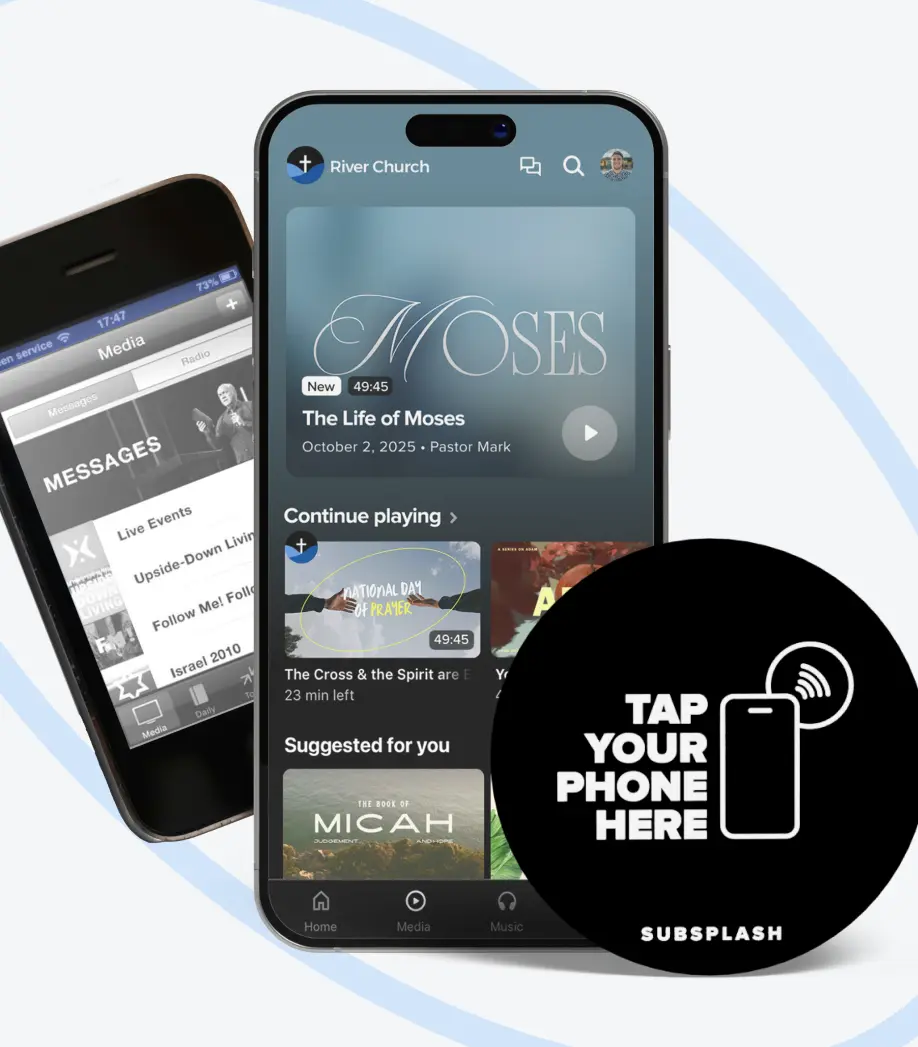
To help churches navigate this enormous shift, Subsplash created the very first church app in 2009 for communication, discipleship, and faith-building—not just information. 

A customizable church app gives ministries a dedicated home for gospel-centered content. This allows churches to move beyond simple information and into true communication and faith-building that travels on-the-go with people.

2. The shift to media (2010)

Quickly, video became the primary way people shared and consumed content. As sermons moved online, many churches relied on platforms like YouTube or Vimeo, but this often meant their spirit-filled content was surrounded by unavoidable ads and distracting recommendations.

The Church needed a high-quality, native home for sermon and discipleship content. By moving to a native media player, ministries offer a focused environment accessible from anywhere without ads, distractions, or censorship. This helps to ensure that the focus remains on the message, not the algorithm.

3. The shift to digital giving (2016)

It’s no secret to pastors that generosity is the lifeblood of a church’s success. That’s why so many pastors and church leaders became concerned when “passing the plate” began to lose steam. 

Around 2016, cash and checks started disappearing from the offering plate in record numbers. A new generation that paid for everything by card or phone simply weren’t bringing physical currency to church.

When it came to giving, it was time for church technology to catch up with the rest of the world. Tools like Subsplash make generosity simple and accessible through:

  • Web giving
  • In-app giving 
  • Text-to-give 
  • Tap-to-give 
  • QR codes
  • Live stream giving prompts
  • And more! 

By removing the friction of physical currency, ministries are reaching more people than ever—meeting their communities exactly where they are.

This also helps ministry budgets go further. The best church giving solutions automatically lower your processing rates as your giving grows—returning more resources to your church to fuel your mission.

One church in Minnesota utilized online giving to raise $500,000 in record time for a new building. When giving is simple, your community can stop worrying about the transaction and focus on the vision you’ve called them to support.

4. The shift to messaging (2019)

By 2019, most churches were discovering that the weekly bulletin and the occasional email were no longer enough to sustain the life of their congregation. Ministry rhythms had become more fluid, and communities were already moving toward real-time communication. 

The problem? Most of those conversations were happening on noisy social media apps or fragmented group texts—places where privacy is a concern and “digital noise” is constant.

Subsplash Messaging was built in 2019 to help churches move these conversations away from noisy social apps and into a secure home for discipleship. Instead of administrative hurdles, church leaders gained the ability to foster authentic connections—whether that’s a small group diving deeper into a Bible reading plan or a volunteer team coordinating for Sunday morning. 

By keeping these interactions inside their church’s own app, churches help ensure that communication is seamless, safe, distraction-free, and easily accessible for all different types of groups and needs.

5. The shift to live streaming (2020)

When the pandemic hit in 2020, every church in the world essentially became a digital church overnight. Pastors had to figure out how to care for people they couldn’t see in person. This was no longer just about transferring a video feed—it was about connecting people to the Church when they needed it most.

That shift continues to reverberate today. A church’s live stream is often the first place a seeker encounters the gospel. In fact, about 80% of people will visit a church’s website or stream a service before they ever visit in person.

Subsplash Live was released in 2020 to help churches in that critical moment reach their people on their website, custom app, and social media platforms. 

Today, with integrated features like real-time chat and in-app Bible notes, you’re not just broadcasting a video—you’re inviting your community to participate in the life of your church, whether they’re in the back pew or on their living room couch.

6. The shift to AI (2024)

While AI wasn’t new in 2024, that year marked the beginning of a massive boom in the technology. Over the last few years, these tools have evolved rapidly, opening up new ways for ministries to reach their communities.

AI is now a regular part of daily life, and your congregation is likely already using it. The goal for church staff isn’t to work against these tools—it’s to use them to multiply your impact.

Churches now have access to AI resources built specifically with ministry in mind. With Pulpit AI, you can turn one sermon into over 20 pieces of discipleship content in minutes. This saves your team hundreds of hours every year, letting you focus on what matters most: the people in your care.

And tools, like Trends AI, help you better understand your church data. Instead of manually building reports, you can ask simple questions about your data and receive instant answers with custom visuals.
So, what does this mean for your ministry?

The tools have changed, but the mission remains the same. 

Whether it’s through a custom app or automated sermon summaries, technology should always accelerate the Great Commission. By simplifying your process, you can focus on the heart of God: the souls who are seen, known, and loved.

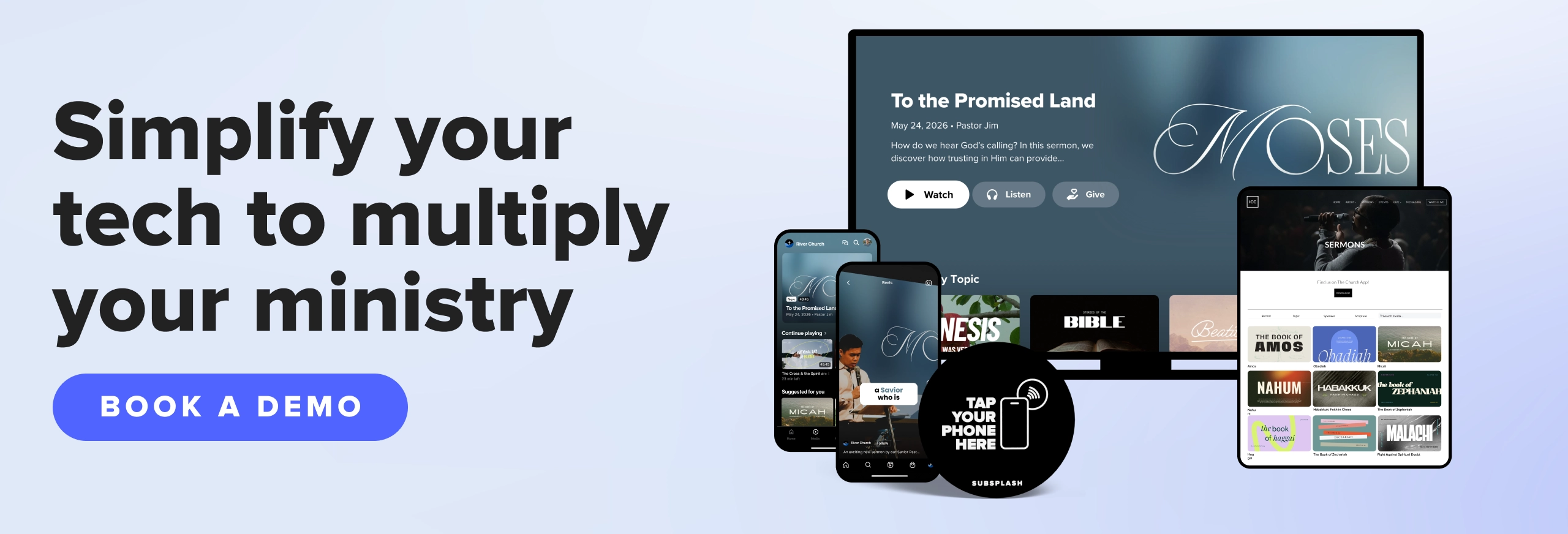
Ready to see how these tools can help you reach more people?

 [.blog-contact-cta]Schedule a free demo today! [.blog-contact-cta]

More resources you may find helpful: 

PIN THIS POST FOR LATER

Author

Lyndsi Bigbee, Marketing Copywriter

Lyndsi is a lover of words, books, and poetry, and is passionate about the local church. Originally from Nashville, she has served in Methodist, Presbyterian, and nondenominational churches across the U.S. and loves to use her experience to help churches through her work at Subsplash. Lyndsi received her M.A. from Asbury Theological Seminary and is deeply committed to the local church’s role in transforming hearts and lives.

Author

Subsplash created the first church app in 2009, and today we’re building upon that same powerful platform to make an impact for the gospel. Over 17,000 organizations partner with us to bring the good news of Jesus to billions of people around the world.

Give your donors the best giving experience with Subsplash Giving.
Learn More
AI for churches
Engagement

The 6 shifts of the modern church

If you feel like the ground is shifting beneath your feet, you aren’t alone. Technology has advanced more in recent years than in the previous generations—and the Church has felt every bit of that acceleration. 

And over the last fifteen years, the rhythms of how your community connects, shares the Gospel, and practices generosity have been completely rewritten.

For many churches, this isn’t just a change in technology—it’s changing how they reach and connect with their community. 

Digital tools like websites and social media are no longer optional extras; they’re essential assets. Today, live streaming and hybrid services are normal rhythms of life. We know your community is on their phones more than ever, which is why reaching them there is so vital.

While technology moves fast, it’s also opening new doors. Instead of just trying to keep pace, churches are finding creative ways to use these tools to share an eternal message of hope with a hurting world.

6 shifts of the modern church & technology

Navigating important technological shifts isn’t easy, yet God calls us to share the Gospel with wisdom and discernment however we can. Beyond just keeping up with trends, it’s about using the tools of our time to share an eternal message of hope with a hurting and confused world. 

Let’s dive into six shifts the modern church has faced around technology over the last few decades. While navigating these changes can feel like a daunting endeavor, with the right tech tools and innovation, churches are learning how to move beyond simply surviving these changes to leading through them.

1. The shift to mobile (2009)

Smartphones changed everything! Suddenly, everyone had an engagement device in their pocket—though it was just as easily a “distraction device.” For church leaders, this was the first major signal that Sunday morning rhythms were no longer enough to sustain daily discipleship.

To help churches navigate this enormous shift, Subsplash created the very first church app in 2009 for communication, discipleship, and faith-building—not just information. 

A customizable church app gives ministries a dedicated home for gospel-centered content. This allows churches to move beyond simple information and into true communication and faith-building that travels on-the-go with people.

2. The shift to media (2010)

Quickly, video became the primary way people shared and consumed content. As sermons moved online, many churches relied on platforms like YouTube or Vimeo, but this often meant their spirit-filled content was surrounded by unavoidable ads and distracting recommendations.

The Church needed a high-quality, native home for sermon and discipleship content. By moving to a native media player, ministries offer a focused environment accessible from anywhere without ads, distractions, or censorship. This helps to ensure that the focus remains on the message, not the algorithm.

3. The shift to digital giving (2016)

It’s no secret to pastors that generosity is the lifeblood of a church’s success. That’s why so many pastors and church leaders became concerned when “passing the plate” began to lose steam. 

Around 2016, cash and checks started disappearing from the offering plate in record numbers. A new generation that paid for everything by card or phone simply weren’t bringing physical currency to church.

When it came to giving, it was time for church technology to catch up with the rest of the world. Tools like Subsplash make generosity simple and accessible through:

  • Web giving
  • In-app giving 
  • Text-to-give 
  • Tap-to-give 
  • QR codes
  • Live stream giving prompts
  • And more! 

By removing the friction of physical currency, ministries are reaching more people than ever—meeting their communities exactly where they are.

This also helps ministry budgets go further. The best church giving solutions automatically lower your processing rates as your giving grows—returning more resources to your church to fuel your mission.

One church in Minnesota utilized online giving to raise $500,000 in record time for a new building. When giving is simple, your community can stop worrying about the transaction and focus on the vision you’ve called them to support.

4. The shift to messaging (2019)

By 2019, most churches were discovering that the weekly bulletin and the occasional email were no longer enough to sustain the life of their congregation. Ministry rhythms had become more fluid, and communities were already moving toward real-time communication. 

The problem? Most of those conversations were happening on noisy social media apps or fragmented group texts—places where privacy is a concern and “digital noise” is constant.

Subsplash Messaging was built in 2019 to help churches move these conversations away from noisy social apps and into a secure home for discipleship. Instead of administrative hurdles, church leaders gained the ability to foster authentic connections—whether that’s a small group diving deeper into a Bible reading plan or a volunteer team coordinating for Sunday morning. 

By keeping these interactions inside their church’s own app, churches help ensure that communication is seamless, safe, distraction-free, and easily accessible for all different types of groups and needs.

5. The shift to live streaming (2020)

When the pandemic hit in 2020, every church in the world essentially became a digital church overnight. Pastors had to figure out how to care for people they couldn’t see in person. This was no longer just about transferring a video feed—it was about connecting people to the Church when they needed it most.

That shift continues to reverberate today. A church’s live stream is often the first place a seeker encounters the gospel. In fact, about 80% of people will visit a church’s website or stream a service before they ever visit in person.

Subsplash Live was released in 2020 to help churches in that critical moment reach their people on their website, custom app, and social media platforms. 

Today, with integrated features like real-time chat and in-app Bible notes, you’re not just broadcasting a video—you’re inviting your community to participate in the life of your church, whether they’re in the back pew or on their living room couch.

6. The shift to AI (2024)

While AI wasn’t new in 2024, that year marked the beginning of a massive boom in the technology. Over the last few years, these tools have evolved rapidly, opening up new ways for ministries to reach their communities.

AI is now a regular part of daily life, and your congregation is likely already using it. The goal for church staff isn’t to work against these tools—it’s to use them to multiply your impact.

Churches now have access to AI resources built specifically with ministry in mind. With Pulpit AI, you can turn one sermon into over 20 pieces of discipleship content in minutes. This saves your team hundreds of hours every year, letting you focus on what matters most: the people in your care.

And tools, like Trends AI, help you better understand your church data. Instead of manually building reports, you can ask simple questions about your data and receive instant answers with custom visuals.

So, what does this mean for your ministry?

The tools have changed, but the mission remains the same. 

Whether it’s through a custom app or automated sermon summaries, technology should always accelerate the Great Commission. By simplifying your process, you can focus on the heart of God: the souls who are seen, known, and loved.

Ready to see how these tools can help you reach more people?

 [.blog-contact-cta]Schedule a free demo today! [.blog-contact-cta]

More resources you may find helpful: 

PIN THIS POST FOR LATER
Pin it
Pin it