



If you’re a church leader, you may suspect that only younger people check out your website before visiting your church for the first time.
But that’s not the case! In fact, 80% of people will check a church’s website before visiting in person, not just the younger generations. And 48% of church visitors report that they are more likely to attend a church service after visiting the website.
It’s no secret that churches today have embraced having a digital presence, including a church website. But this often underutilized tool can be a game changer for your ministry.
Let’s take a look at why a great website is crucial for your church communications—and how to build one fast!
Why a great church website is your most important digital front door
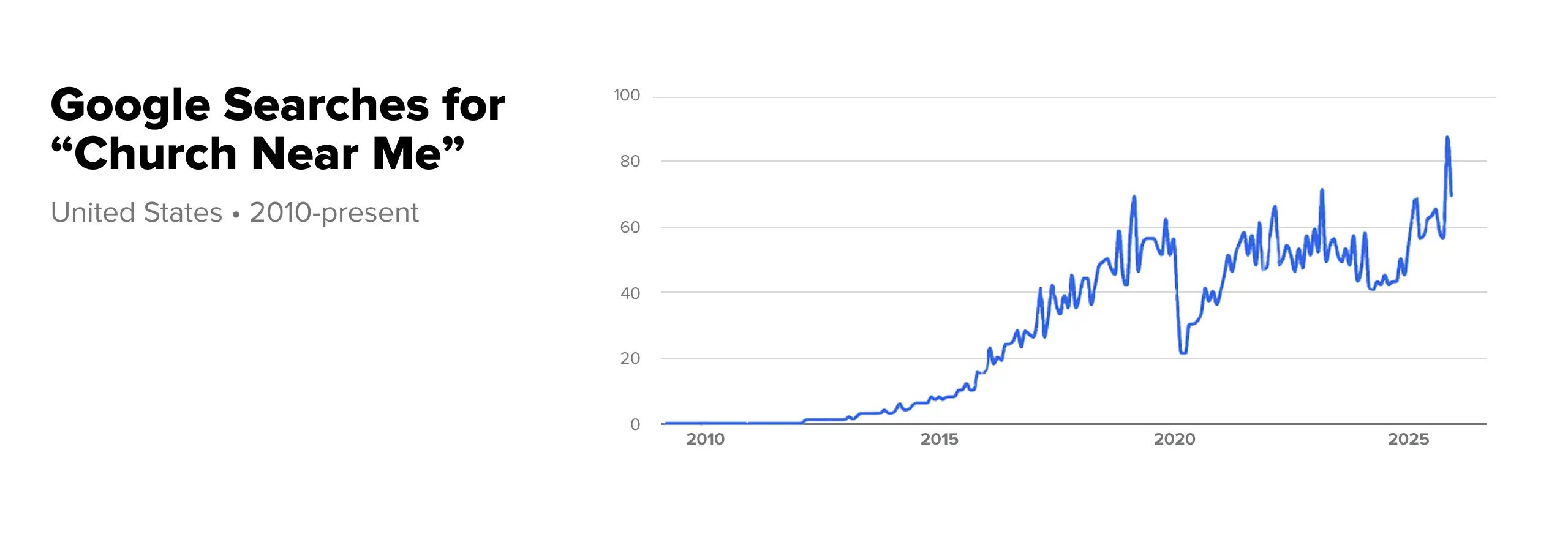
Did you know that according to Google Trends, searches for “church near me” are at all-time highs? More people than ever are looking for a church to visit, attend, and to call home.
A website often serves as people’s first introduction to your church. Within seconds of landing, visitors form judgments about your values, relevance, worship, and professionalism.
Imagine that you’re new in town and looking for a nearby church. You find a church’s website, but there is no contact information, service times, or even location. With so little information, you couldn’t visit the church even if you wanted to!
Now picture the same scenario, but this time the church has a modern, well-designed site. It contains all the information needed to plan your visit, and clearly communicates that the church is active, welcoming, and worth exploring.
Because most people will check your website out before their first visit, your church’s website is the digital front door to your ministry. It’s the place where first impressions are formed, curiosity is sparked, and engagement begins.
How first impressions help attract visitors
First impressions don’t just influence whether someone visits your church—they determine whether they take the next step. When a visitor lands on your website, they’re often quietly asking, “Is this a place I can belong?”
A great church website guides visitors toward clear next steps. Instead of leaving people to guess what to do next, intentional calls to action—like Plan Your Visit, Get Connected, Join Our Email List, Make a Gift, Join a Small Group, or Request Prayer—they turn passive browsers into active users.
When these options are visible and easy to use, visitors are more likely to share their contact information and take the next step towards ongoing engagement.
A well-designed website anticipates common questions and offers simple ways for visitors to stay connected. Whether someone signs up for updates, registers for an event, downloads a resource, or submits a visitor form, each interaction creates an opportunity for your church to follow up personally and build a relationship.
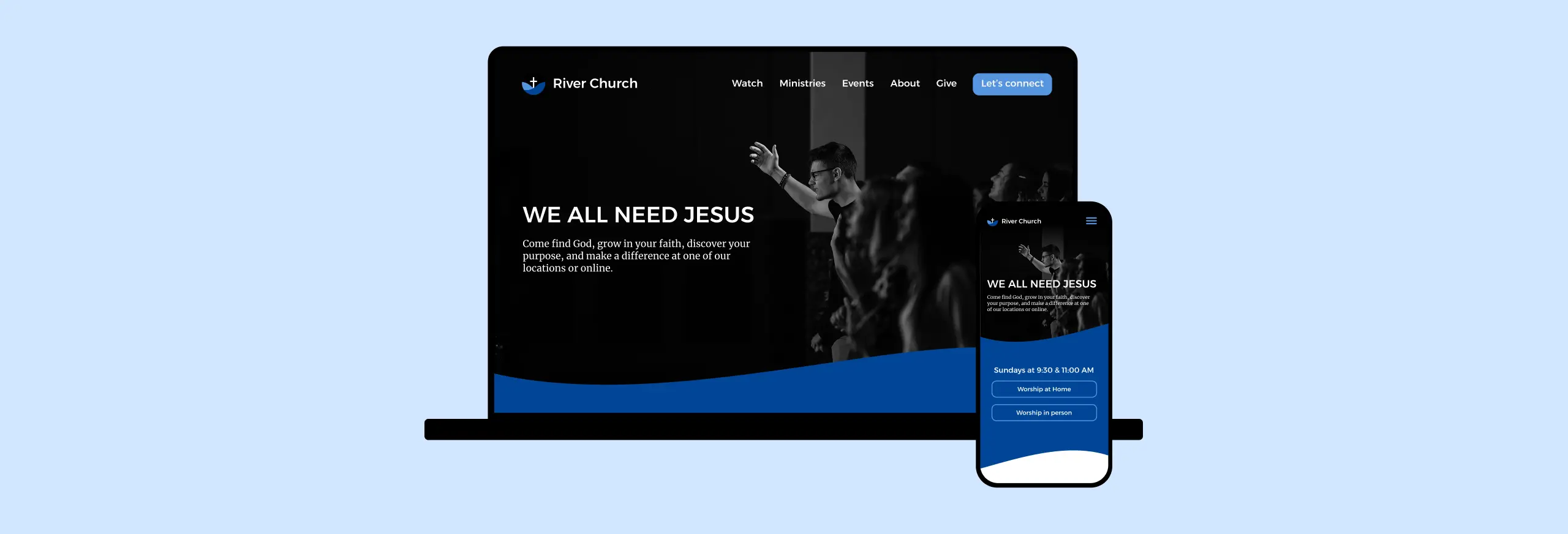
Lastly, more than half of web traffic today comes from mobile devices. If your site doesn’t adapt to smartphones, you risk losing people before they even scroll.
Common website mistakes that turn visitors away
Many churches make the mistake of neglecting their website. There’s more to it than just checking off the box of creating a website and walking away. Problematic areas for church websites can include:
- Missing information: When visitors can’t easily find Sunday service times, your church address, or basic information about how to plan their visit (including student ministry and children’s ministry), they simply won’t visit. And, without a mission statement, information on staff, or even your church’s history, visitors may be hesitant to visit.
- Old content: If your website hasn’t been updated in even a few weeks, your content is no longer up-to-date! Keeping your website up-to-date with church events, your church calendar, volunteer opportunities, and even a current sermon series is crucial for your most important digital front door.
- Limited photos: Does your church website have limited photos? Without recent and professional-looking photographs from a wide range of activities and age groups, visitors may struggle to picture what worship, community, and your church culture look like—and how they fit in.
Overall, if someone lands on a site that feels outdated, confusing, or hard to navigate, they’re likely to leave and not consider visiting. On the flip side, an updated, relevant, inviting, and user-friendly website can provide the right information and motivate people to visit your church!
How to build a high-impact website—fast
First impressions matter, even online. This is especially true for churches as they are seeking to welcome newcomers. In today’s digital age, most people learn more about a church, ministry, or organization first through its website—not a billboard, not a friend’s referral, and not even social media pages.
Here’s how to create a website that captures attention and grows engagement quickly!
Choose a platform that supports your needs
Not all website builders are created equal—especially for churches. While generic tools can help you create a basic site, they often fall short on features churches rely on most: integrated media, event management, online giving, mobile responsiveness, and content management tailored to ministry workflows.
Another major challenge with church tech is juggling multiple tools, companies, dashboards, and multiple support teams.
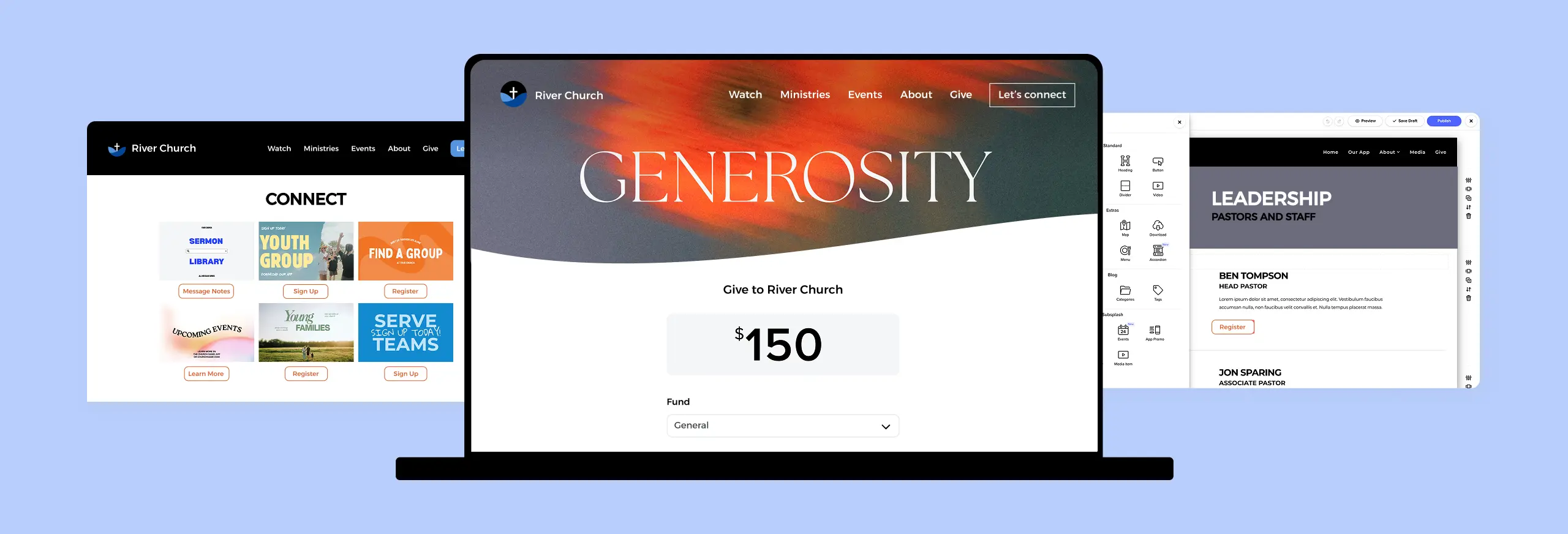
That’s where a central hub like Subsplash comes in! Built specifically for churches and ministries, our church website builder was created with churches like yours in mind. WIth Subsplash, you get:
- Modern, mobile-friendly church templates designed to make strong first impressions.
- A drag-and-drop builder lets you publish quickly without technical expertise.
- Built-in SEO enhancements help people find you online.
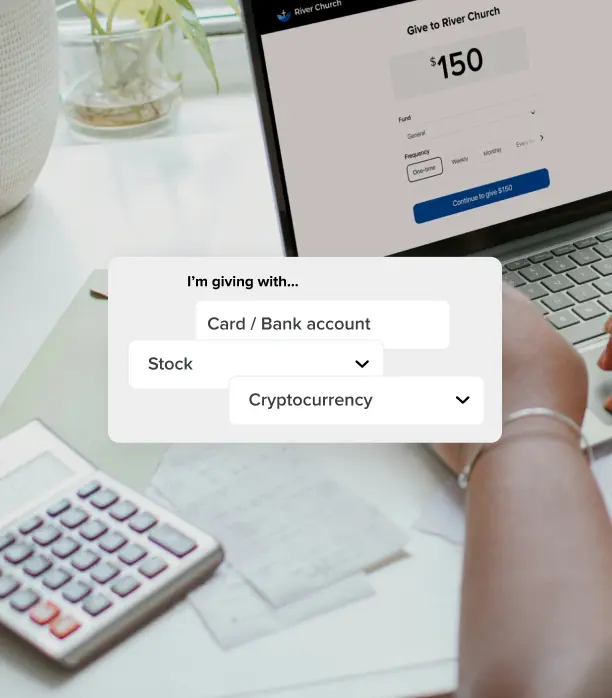
- Online giving buttons and forms that encourage generosity without leaving the page.
- Centralized content management allows you to manage your church website, app, media, events, giving, and more from one central dashboard.
- Searchable media libraries mean that every media item published on your website gets a unique page, making your content easier to share and more discoverable by search engines.
- Live streaming capability so your weekend services reach beyond the walls of your building.
- Announcement banners and mobile-optimized landing pages for last-minute calls to action.
- …and more!
You only get to make one first impression. Church websites on the Subsplash Platform give visitors the best user experience, and they capture engagement and connect it back to your ministry goals.
Best practices for your digital front door
If you’re looking for best practices for your digital front door, here are a few practical tips you can adopt today:
- Clear information: The most important information should rest “above the fold”, before people need to scroll down on your website. This includes your church name, worship times, contact information, and address.
- Helpful navigation: Top menus should show your most important pages—events, giving, contact info—front and center.
- Strong visuals: Use photos and videos to tell the story of your community and make the site feel alive.
- Easy forms: Place signup forms or donation buttons on key pages.
- Device-friendly layout: Ensure your site is fully responsive and mobile optimized.
- Compelling calls-to-action: Every page should invite users to do something, such as download your church app, watch your latest sermon, sign up for small groups, volunteer, give, or get involved.
With custom church website templates and a powerful drag-and-drop editor, you can build and publish a beautiful new website in no time at all.
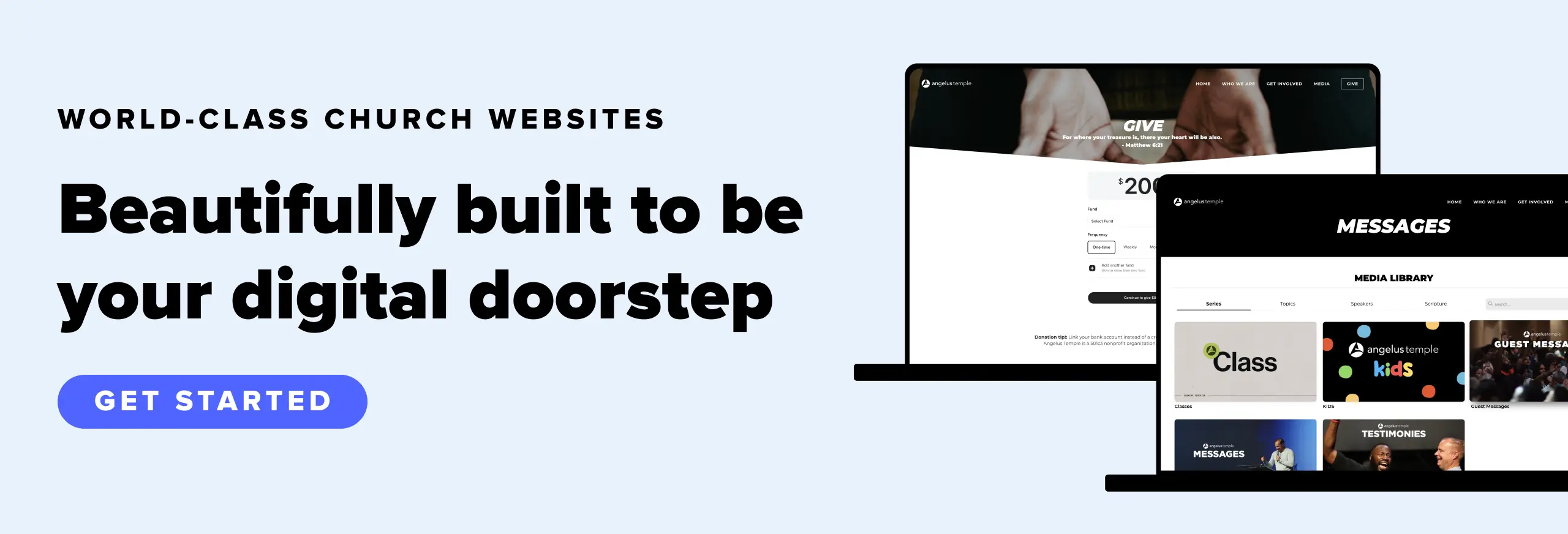
Your website is worth the investment
Your website isn’t just a random part of your church strategy. Instead, it’s your most important digital front door—and studies prove it.
Whether you start with a generic site or choose a purpose-built church platform like Subsplash, the key is to think of your website as a living part of your ministry—one that welcomes, engages, and empowers every visitor.
If you’d like to learn how your church can benefit from Subsplash with no annual or setup fees, [.blog-contact-cta] let’s chat! [.blog-contact-cta]
More resources you may find helpful:
- 100 must-know facts about technology & church trends for 2026
- With Subsplash Workflows, nobody falls through the cracks
- Faithful stewardship in the digital age: The Subsplash approach to church technology
- Turning dreams into reality: How one church raised $500k with Subsplash Giving
- Why churches see 14% more giving with Subsplash Giving
-min.webp)
.webp)
.webp)