







December sneaks up on everyone—but for churches, it shouldn’t!
Every year, it’s no surprise that the holiday season is busy, filled with hectic schedules and often the same events that recur year after year: a church fall festival, your trunk-or-treat event, holiday events, an Advent sermon series, Christmas services, year-end giving, and more. Each of these events takes intentionality and thoughtful planning, usually months in advance.
Year-end giving represents one of the most generous seasons of the year. But whether your church struggles with organization, a smaller staff, or just plain old procrastination, year-end giving is often put on the backburner—where it simmers until it starts to boil over and cause a big mess!
Year-end giving can make or break your annual budget, and yet so many ministries wait until the calendar turns to November (or even December) before they even start planning for it. If that sounds familiar, let’s discover a few reasons why year-end giving is crucial, and why you should start your planning process today. We’ll also look at a step-by-step process, as well as a few resources for churches to help you easily get started with your year-end giving planning.
Year-end giving: Why your church should start preparing today
Understanding the impact of year-end giving
Year-end giving refers to the donations churches receive in the final weeks of the calendar year, typically driven by the combination of holiday generosity and donors looking to make one last tax-deductible gift before December 31st. For churches and ministries, a year-end giving campaign is a focused effort during November and December that invites givers to support the mission through end-of-year contributions.
The numbers back up just how significant this season really is: most nonprofits and churches receive a significant portion of their annual giving in the month of December alone, with most churches bringing in over 30% of their annual donations in that single month!
That means for many congregations, a few short weeks can determine whether the year ends in a surplus or a shortfall. A well-planned year-end giving campaign can become the financial foundation for your entire ministry year, setting your church up for success year after year.
Why prepare months in advance?
Unfortunately, many churches treat year-end giving like a December sprint instead of a fall marathon. And that’s exactly what leads to trouble. When planning starts too late, it results in last-minute frantic requests, scrambling to track down year-end numbers, and emails that compete with Christmas communications.
Preparing your campaign early allows your ministry to clearly communicate financial goals, showcase Kingdom impact, and collect funds required for future projects without scrambling during the busy holiday season.
Starting early gives you room to:
- Thoughtfully align your Advent and Christmas outreach with your year-end appeal instead of letting them compete or collide
- Gather accurate data and testimonies instead of guessing or frantically making dozens of phone calls under a quick deadline
- Carefully segment your year-end giving communications to the right groups of donors
- Write, design, and review your communications thoroughly instead of rushing them out the door or overly relying on AI tools like ChatGPT
- Build excitement and trust with your congregation around giving, demonstrating how their year-end gift will continue to make an impact in your church and community
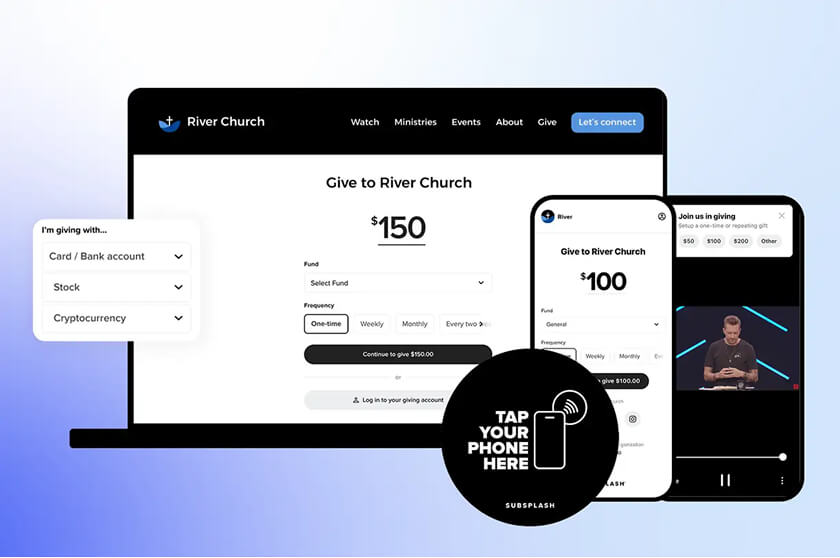
- Provide multiple giving options for your donors so they can give as easily as possible, including online giving, text-to-give, tap-to-give, stock & crypto currency, recurring giving, Qualified Charitable Distributions (QCDs), and more!
- Utilize free church resources and important tools that will make the process much smoother
- Protect your staff’s time and energy to prevent burnout during the special holiday season
Don’t you see how preparing months in advance for your year-end strategy can set you up for success? When you begin planning your year-end giving campaign in a timely manner, your ministry gains the time needed to review past financial trends and set intentional targets. Early preparation gives your leadership team clarity on what worked in previous years and what needs refinement.
You can also build a thoughtful communication schedule that gradually prepares your congregation to participate, rather than rushing out sudden requests right before December 31.
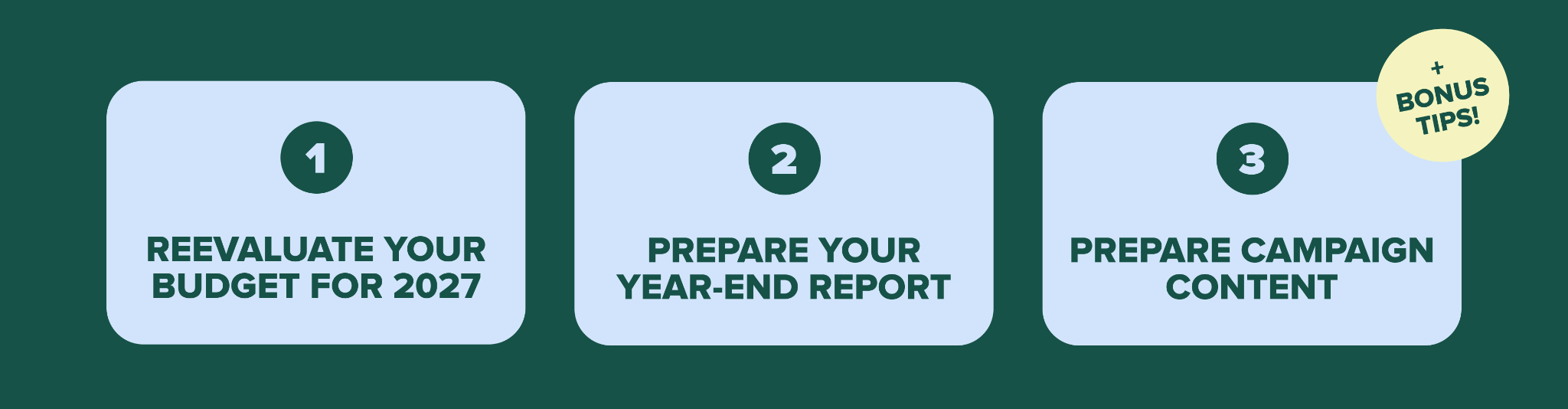
Whether you’ve already gotten started or are looking to get started today, here are some important steps you can take to start preparing for your year-end giving as soon as possible!
A step-by-step guide for year-end giving planning
Step 1: Reevaluate your budget & plan for 2027
Before you write a single email, sit down and look at your 2027 budget. Preparing for year-end giving requires an honest look at your financial goals for the coming year. Take time with your finance team to review facilities and ministry goals to identify urgent, specific needs. What’s coming up? A roof that’s on its last legs? A mission trip that needs full funding? A staffing need or building project that’s been on the back burner?
Specific, practical goals give givers clear reasons and powerful motivations to contribute. People respond to real stories and real needs and want to give towards something that excites them. Specific, tangible needs give your congregation a reason to give beyond “help us hit our goal.”
Once you know your needs, work backward into a number: How much does your year-end campaign actually need to raise to close any gaps and set 2027 up for success? That number becomes the backbone of your whole campaign; it shapes your messaging, your goals, and how you communicate urgency to your congregation.
Sharing these concrete projects and goals creates meaningful motivators for your congregation, helping them see exactly how their gifts fuel real ministry. Avoid making common year-end giving mistakes by firstly providing this level of vision and financial transparency.
Step 2: Start preparing your year-end report today
Waiting until November (or even December!) to pull together graphics, draft emails, and outline financial goals creates unnecessary pressure and stress on your staff.
Donors give more when they trust that their money made a difference, and one of the best ways to build that trust is a year-end report, sometimes called an “impact report.” This is where you show your congregation, in real numbers and testimonies, what their generosity actually accomplished over the last year, and how they can support your mission over the next one.
The catch is that pulling this together usually means gathering data from a dozen different places: attendance, giving records, event participation, sermon views, small group engagement, and much more. It’s tedious, time-consuming, and often gets rushed or skipped when it’s left until December.
To help churches easily surmount these types of data gaps, Trends AI by Subsplash is your numbers, data, and trends advocate. Instead of manually pulling reports from multiple systems, Trends AI surfaces your church’s key data and trends in one place, creating instant data clarity. That means building an accurate, compelling impact report takes a fraction of the time it used to—and without admin having to spend hours chasing down numbers nobody can find or remember.
The bottom line is that givers want to know how their contributions made a difference over the past year. Creating a year-end report highlights stories of life transformation alongside key statistics like baptisms, community meals served, global mission work, and more. Starting today on your year-end report gives you enough time to gather these numbers and stories without all the headaches and stress!
Step 3: Prepare your campaign content well in advance
Once you know your budget needs, and your impact report is designed and printed or published online and ready for viewing, it’s time to build your communications campaign—and this is where advance planning really pays off! That means having everything ready to go, well before December, including:
- A full email sequence for your campaign
- Segmented emails per donor giving groups
- Text message reminders for key giving deadlines
- Social media posts and graphics
- Multiple giving options: communicated, set up, and easily accessible
A successful campaign relies on clear messaging across every channel your congregation uses. Early preparation allows you to write email copy, schedule text messages, draft social media posts, and design custom graphics long before the campaign launches.
Pro Tip: To help your team get started today, download our free Growing Generosity Graphic Templates to save hours of design time while maintaining consistent visuals across all platforms.
Protect your staff from holiday burnout
Here’s something that often gets overlooked: December is already Christmas. It is a sacred season centered on celebrating the birth of Jesus. Yet church staff also have Christmas services, outreach events, extra rehearsals, family gatherings, and more on their plate—it doesn’t stop! Your staff’s plates are already overflowing before you add a year-end campaign on top of it.
If your year-end giving push isn’t planned until December, it doesn’t just compete with Christmas for your congregation’s attention—it competes with Christmas for your staff’s time and energy, too. That’s a recipe for holiday burnout, and it’s completely avoidable.
When your emails, reports, social posts, and segmentation are built out in October and November (or long before that), your staff walks into December simply executing a plan, not having to create one from scratch while also decorating the sanctuary and rehearsing the Christmas program.
Providing your team with adequate lead time protects staff morale and ensures polished, high-performing campaign content. Rushed, exhausted work rarely resonates as well as thoughtful, well-timed communication.

Get started with your year-end planning today
Preparing for year-end giving is a multi-month journey that yields lasting benefits for your entire ministry. In fact, in the future you may consider having quick check-ups on your calendar every month throughout the year. But for now, let’s start with as early as September or October.
By reviewing your budget early, identifying urgent needs for the upcoming year, creating an impact report with accurate data, and preparing segmented messaging in advance, you position your church to finish the year strong.
Setting aside time today to build your year-end giving strategies ensures your church is ready to inspire generosity and fuel your mission for the year ahead. Start the conversation today, not in December. Your budget, your staff, and your congregation will thank you for it!
Interested to see how Trends AI works? Set up a demo today and discover how you can start looking at important patterns, numbers, and more in no time!
.webp)

.webp)