

In 2025, the average American made nearly ten impulse purchases a month and spent an estimated $3,045 on unplanned buys over the year. That’s not surprising when online stores never close. In fact, 43% of consumers say they’re most likely to make an impulse purchase while shopping in bed. With just a few taps on our phones, we can add any item to our cart and buy it in seconds!
Right now, it’s possible to shop for literally twenty-four hours a day—something that is unprecedented in human history. The pressure to purchase is on, and your congregation is feeling the heat. Add on social pressures like “keeping up with the Joneses,” online influencers, and algorithm-driven ads, and consumerism quickly becomes a status symbol or even an identity.
How can the Church reverse the trend towards consumerism as an identity? It starts by reminding your people who they are and whose they are. Scripture says that “the earth is the Lord’s, and everything in it” (Psalm 24:1), and that includes every paycheck your congregation brings home.
Let’s take a look at one of the most practical antidotes to commercialism: recurring giving! Discover how recurring giving can help your people put God first in a culture that’s always pushing them to buy more.
How recurring giving pushes back against consumerism
Consumerism is a social, cultural, and economic inclination towards buying nonessential goods. This desire for more drives people to respond to impulses. A notification, a limited-time offer, or a saved payment method turns a passing want into a purchase within seconds. Over time, those small, quick decisions shape what people value.
Recurring church giving asks for the opposite kind of decision. A donor prays and decides what to give before the week’s impulses ever show up. Paul describes this same kind of planned generosity when he tells the Corinthian church to “set aside a sum of money in keeping with your income” on the first day of every week (1 Corinthians 16:2). He also writes that “each of you should give what you have decided in your heart to give” (2 Corinthians 9:7).
A recurring gift scheduled weekly or monthly is that heart decision, made ahead of time and kept consistently and automatically. It puts God first in the calendar and the budget and makes it easy for donors to give automatically, just like with their subscriptions. And because Jesus taught that “where your treasure is, there your heart will be also” (Matthew 6:21), a steady habit of giving first can slowly reshape what your people treasure.

A quick glance at church giving today
Generosity is still a big part of American life. In 2025, Americans gave a record $617 billion to charity, and religion received the largest share at $151.58 billion, or 23% of all giving. Even so, giving to religion grew more slowly than any other sector, and its share of the total keeps shrinking.
Inside the local church, the picture is even less consistent. Just 10–25% of a congregation are tithers, which means that 75–90% of churchgoers don’t tithe at all. Additionally, only 3–5% of Americans who give to their local church do so through regular tithing.
Now compare that to how faithfully most people pay for their subscriptions. The average American now spends $111 a month on subscriptions, or $1,332 a year, up 23% from last year. Those payments come out automatically every month.
For many churchgoers, regular and consistent tithing gets put on the back burner. When paychecks arrive, often rent, groceries, streaming services, and a few unplanned purchases follow close behind. And when the offering plate finally comes around on Sunday, the gift gets measured against what’s left in the account instead of what was set aside in faith.
When giving waits for Sunday morning, this week’s spending has likely already happened. Most people who give this way aren’t being stingy. They simply give last because the system puts church giving last.
Recurring giving reverses that order, and it gives pastors a practical way to disciple people in one of the most formative areas of their lives. Generosity is one of the clearest ways for your people to live out their identity in Christ, especially when they give God their first and best instead of whatever is left at the end of the week.
Your congregation’s money has already moved online
In a webinar with church leader Carey Nieuwhof, Nieuwhof shared that, “86% of all transactions in the U.S. that involve money are a digital transaction. 14% are cash and check. Church adoption is way behind this curve.”
Your donors reflect that shift. Today, 63% of donors prefer to give with a card, and most no longer carry cash or want to use checks.
Churches that accept tithing online increase overall donations by 32%! When a church relies mostly on cash and checks, it asks people to step outside the way they handle every other financial decision. As Nieuwhof stated, “People who want to give, if they’re not presented with an easy option, will not give.”
Automation works best when you pair it with discipleship
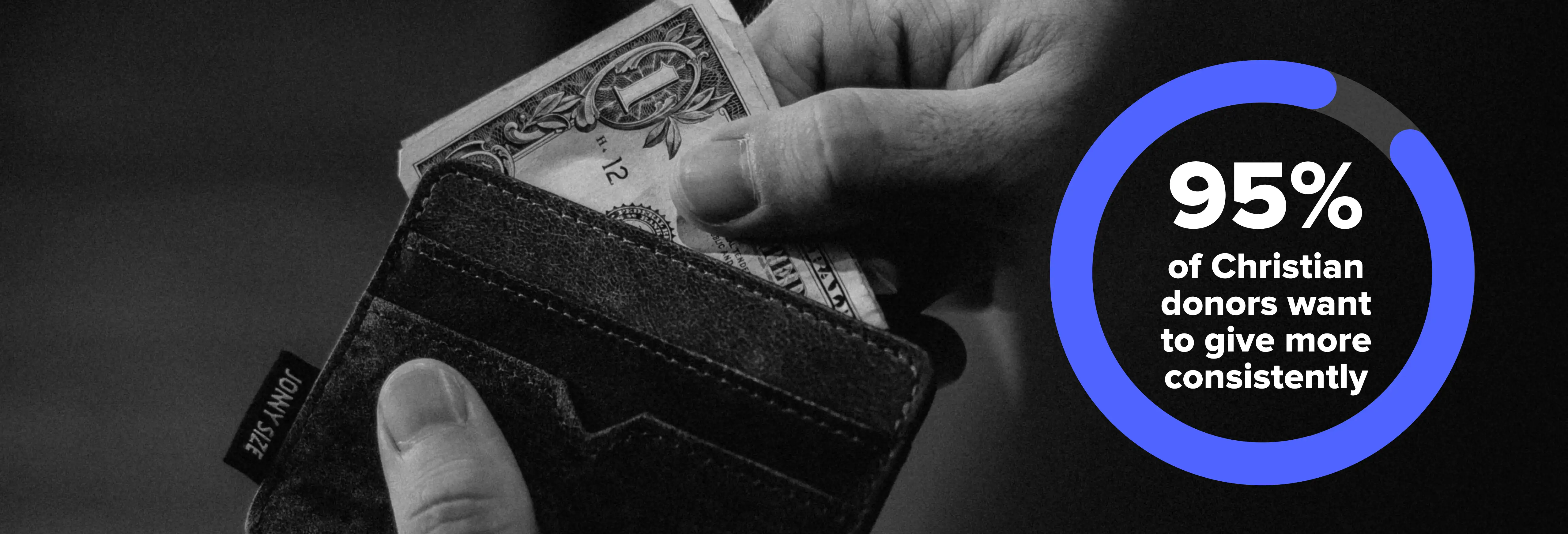
Fortunately, 95% of Christian donors want to give consistently! That’s why recurring giving is a great antidote to consumering. Not only does it meet a tither’s need to give consistently, but it helps them easily handle the logistics every single month—just like a recurring subscription.
In a world with hybrid church attendance, online giving is more important than ever: “If you have an average church attendance on Sunday of 100 people,” shares Nieuwhof, “you probably have 200 to 300 people who call your church home.”
Many of those people watch online, listen to a podcast on their commute, or open your church app on a Tuesday. If giving only happens in the room on Sunday, a large part of your church family never gets a simple way to take part.
Teach your people about recurring giving
Jesus talked about money and possessions often, from the rich young ruler (Luke 18:18–30) to the parable of the rich fool (Luke 12:13–21), because he knew how easily they compete for our hearts. He put it plainly: “You cannot serve both God and money” (Matthew 6:24).
Generosity is a discipleship issue long before it becomes a budget issue. When you teach recurring giving as part of following Jesus, you help your people grow in trust, gratitude, and obedience one paycheck at a time. Here are a few ways to disciple your congregation toward firstfruits giving:
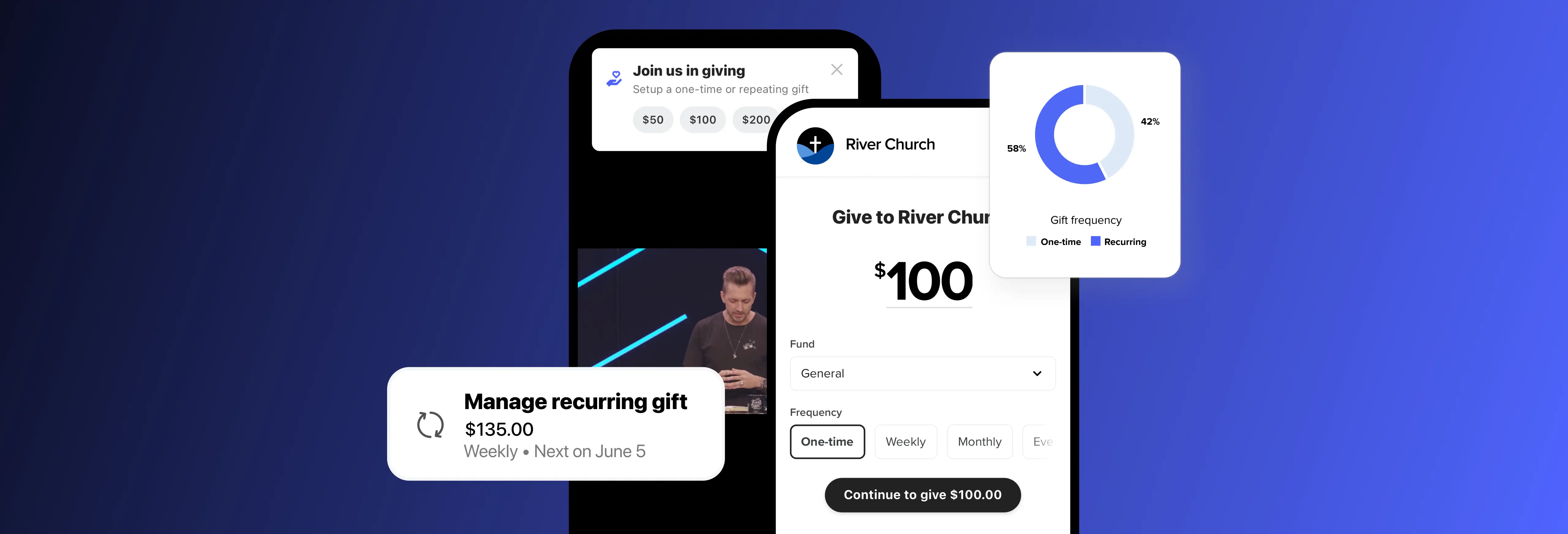
- Make recurring giving possible. Is recurring giving possible at your church? If not, it should be! Make sure your people can set up a recurring gift in a few taps on your app, website, or giving page. Tools like Subsplash Giving™ make it simple for donors to schedule and manage their own gifts (more on that below).
- Teach firstfruits from the pulpit. Explain that scheduling a gift on payday is a spiritual decision, not just a convenient setting.
- Invite people to align gifts with their pay schedule. A weekly, biweekly, or monthly gift that matches a paycheck makes giving the first transaction instead of the last.
- Revisit commitments once a year. A fall or New Year pledge season gives people a natural moment to pray, review, and adjust their giving.
- Share stories of generosity. Real testimonies that inspire generosity help people see what their gifts make possible.
- Thank your recurring givers. A personal note from a pastor reminds people their faithfulness is noticed.
Lastly, it’s important to acknowledge that times are economically tough for many families. In 2026, 54% of Americans say they live paycheck to paycheck, and 48% say they struggle to pay their monthly bills.
Yet recurring payments are often the last thing to go. When gas prices rise, only 7% of Americans say streaming subscriptions are the first expense they cut, well behind dining out (29%) and summer travel (20%).
The point isn’t to guilt people or shame them for the way they spend. It’s to gently help them see that their money often goes wherever the system makes it easiest, and that church generosity can be just as easy to commit to and plan for.
Making recurring giving simple with Subsplash Giving
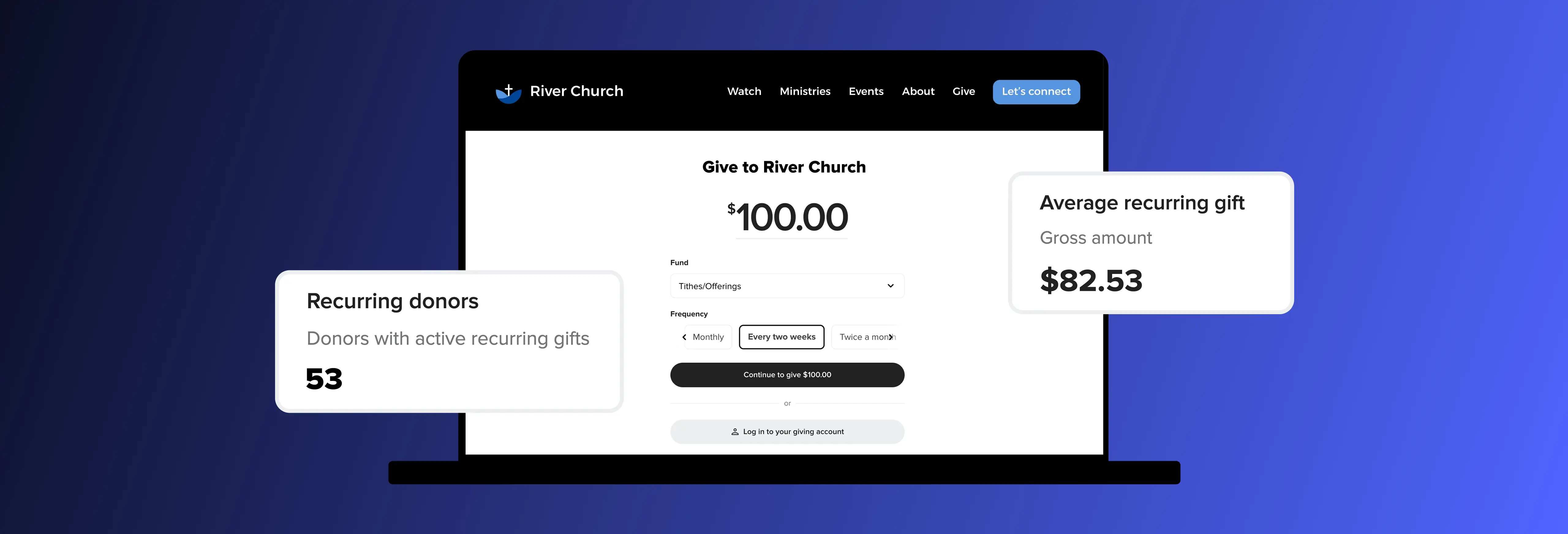
The right tools for churches remove the friction found in church giving. Subsplash Giving lets donors set up recurring gifts in your church app or on your website in a few taps. They can give with Apple Pay, Google Pay, or instant ACH, and guests can give without creating an account.
In 2025, recurring donors using Subsplash Giving gave 134% more than non-recurring donors.
For seasons of commitment, campaigns and pledging let your congregation make a planned, long-term promise and track progress toward it. The Ethiopian Evangelical Church in Minnesota saw what happens when giving gets easier. After adding Subsplash Giving alongside the offering basket, the church raised over $500,000 toward its building campaign. Check out their amazing testimony here!
Help your people give their first & best
Consumerism will keep making spending effortless. Your church can make generosity just as simple, and just as intentional. Even a small recurring gift, given faithfully and first, is a meaningful step of trust.
As Carey Nieuwhof reminded church leaders in our recent webinar, “The key is not for us to be echoing the left or the right or wherever we happen to be, but to find the Gospel narrative and share that story of hope.” In a culture that tells people they are what they buy, generosity tells a better story. Every recurring gift is a small, steady way for your people to show that their hope is in God, not in their next purchase.
For more insights on leading your church with boldness in this cultural moment, watch the full webinar with Carey Nieuwhof. Or, [.blog-contact-cta]talk with our team [.blog-contact-cta]to see how Subsplash Giving can help you Fuel Your Mission™ and encourage consistent, recurring generosity all year long.