






Engagement with Artificial Intelligence has gone up significantly since its release to the public in 2022, which means your congregants are engaging with AI more than ever. From students asking about life’s meaning to staff drafting emails, AI is officially part of your church’s daily life.
However, many organizations lack clear guardrails. Without a plan, you miss opportunities and ignore real risks. To help you navigate this new territory, Michael Whittle, VP of AI, and Ryan Schilling, Project Manager at Subsplash, recently hosted a webinar: “The AI-Equipped Church: How to Use AI & Why Your Church Needs a Policy.”
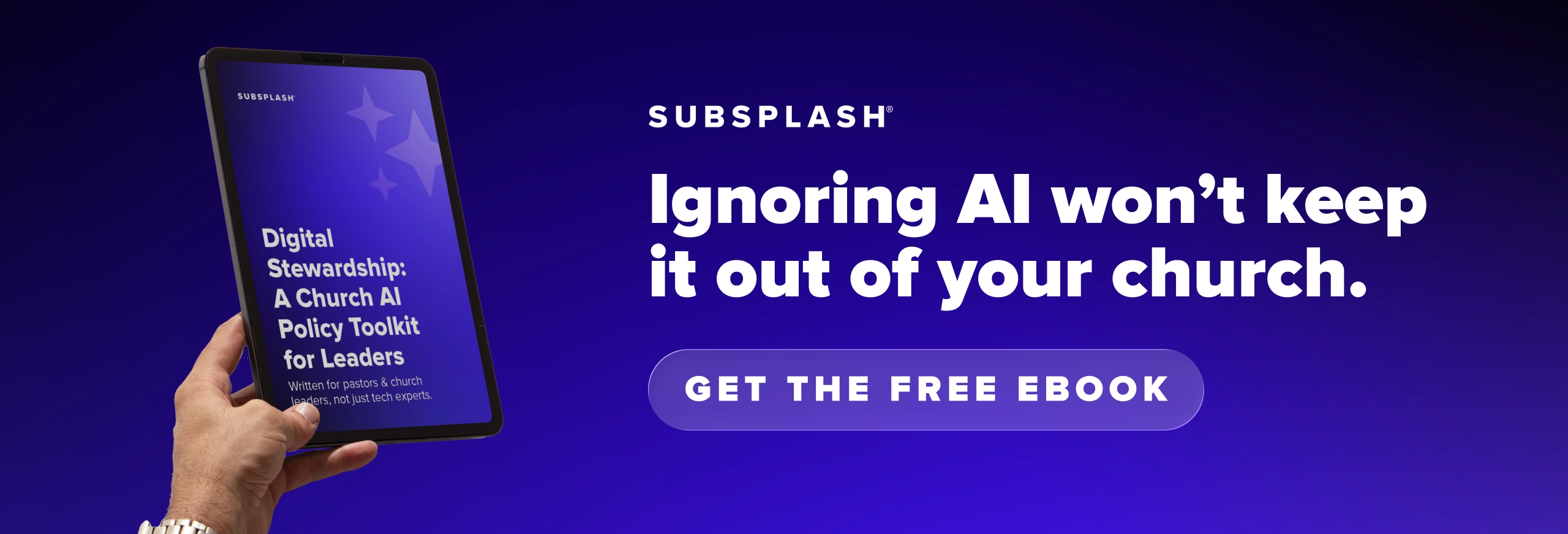
Watch the webinar below and download your free Church AI Policy Toolkit. This ebook includes a conversation guide and helps leaders understand the importance of writing an AI policy.
Your church & AI: 5 Conversations to navigate today
1. Core identity & values: Who you are
Before you can govern AI use, you need to be explicit about what you believe about people, technology, the pastor’s role, and your church’s particular calling. It’s important to ensure your use of these new tools remains consistent with your mission, ethics, and theology.
An AI policy that isn’t grounded in theology isn’t a policy—it’s a compliance checklist.
It’s important to navigate questions like:
- What does our congregation believe about technology?
- Where are we most afraid AI could go wrong in a church context?
This conversation surfaces the convictions that will drive every decision that follows in the four remaining conversations below.
2. Current reality: What you’re already doing
AI is most likely already in your church. Creative teams use AI with Canva or Adobe. Admins use AI to write social media posts. Youth pastors may be using ChatGPT.
Before you write a policy for what should happen, you need to understand what’s already happening at your church. This conversation requires honesty, not judgment.
At your team meeting together, consider asking questions like:
- What specific AI tools are staff members currently using? And for what tasks?
- What data has been uploaded to AI platforms so far?
- Has any AI-generated content been published or shared with the congregation knowingly or unknowingly?
These are vital conversations to navigate with your church today.
Pro-tip! Download & print out “The Church AI Conversation Guide” section of the ebook to help your staff answer these questions together!
3. The opportunity: What you could accomplish
Most church AI conversations focus entirely on risk. That’s only half the picture! The other half is opportunity, and the churches that fail to explore it will let a massive window close.
What could AI free your team to do? Think through questions like,
- Where does our team spend the most time on tasks that AI could assist with—without theological risk?
- What content does our congregation need that we can’t currently produce because we don’t have capacity?
When discussing the opportunities of AI for churches, consider how existing tools may allow you to:
Amplify your message
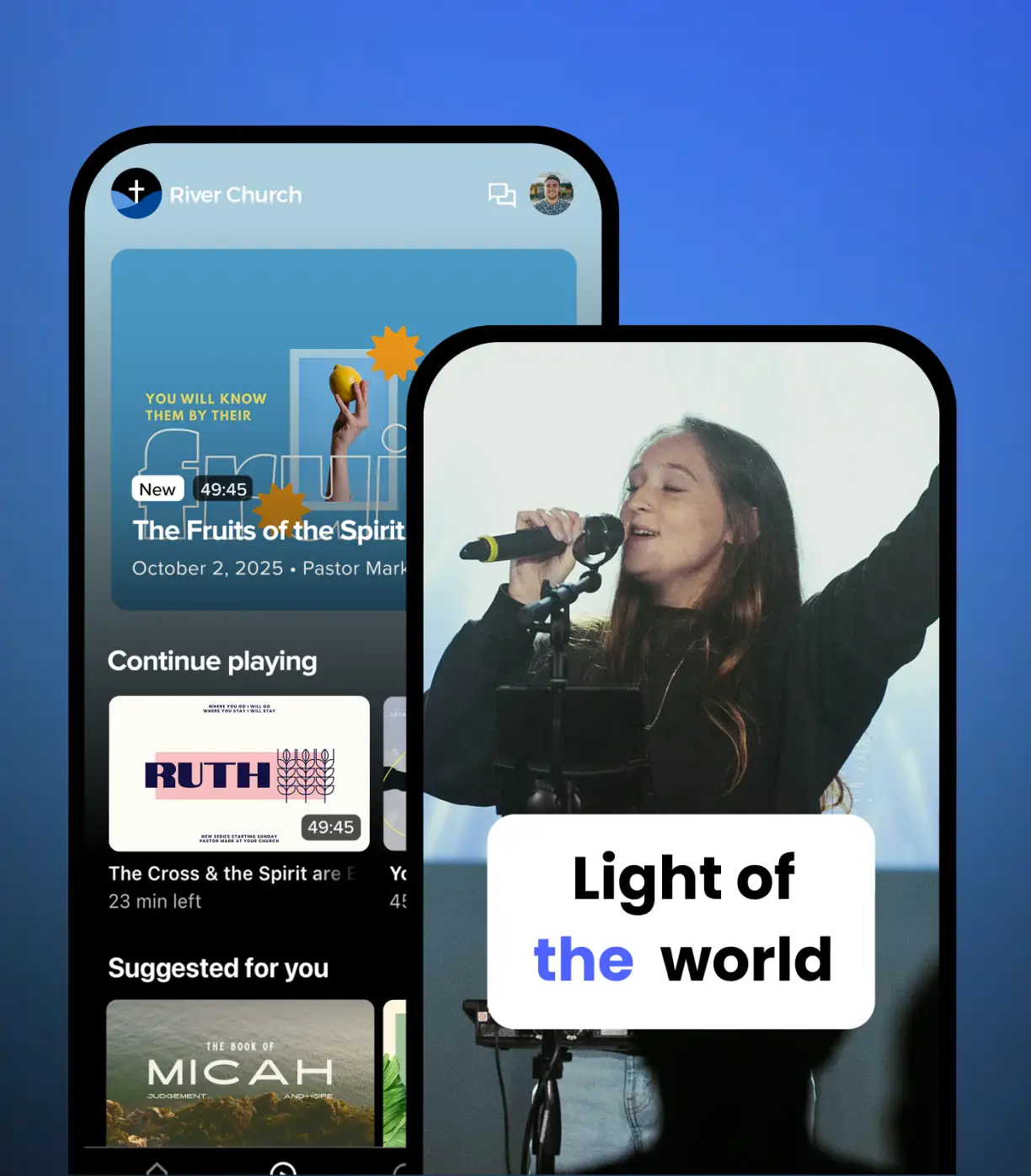
We know how much prayer and preparation you pour into every Sunday sermon. To help that message resonate throughout the week, you can use tools like Pulpit AI to expand your reach.
This technology takes your original sermon audio or video and creates various discipleship resources—such as devotionals, small group guides, and social media clips. Because the content is drawn directly from your own teaching, your specific theology and tone remain consistent across every format.
Organize & understand your church data
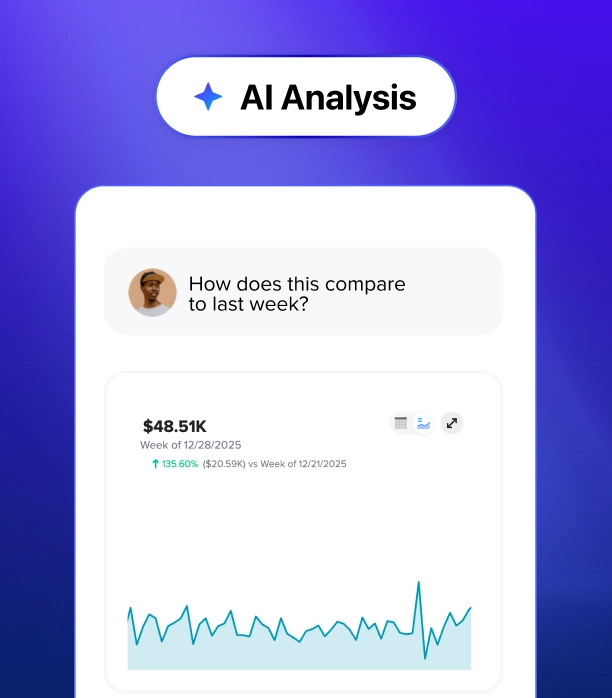
Managing a growing community often involves navigating scattered information, from giving trends to small group attendance. Trends AI helps you gain a clearer picture of your church's health by allowing you to ask direct questions about your data and receive immediate answers.
Instead of spending hours in complex spreadsheets, you can quickly identify insights like how many people joined a small group in the last month. Having this information in real time allows your leadership team to make more informed decisions about how to care for your people.
AI tools for churches should be biblically grounded, maintain your pastor’s authentic voice, and free your staff to focus on what matters most—building relationships and making disciples.
4. Boundaries: Where your line lies
Every church has lines they won’t cross. Yet the challenge is that most haven’t drawn the lines explicitly in regards to AI for church leaders, which means staff are left confused and guessing.
Instead, this conversation makes your boundaries explicit. When you’re navigating conversations about boundaries, ask questions like:
- Where is the line between AI assisting sermon preparation and AI replacing it?
- Where does our church draw that line?
- What content should never, under any circumstances, be produced or assisted by AI at our church?
As you work through these questions, expect disagreement. That’s the point! Talk through it before a real situation or risk forces the conversation.
5. Governance: Who decides
During this conversation, it’s important to assign responsibility to a specific church staff member. A policy without named owners is just a good intention.
Every AI policy needs people who:
- Own specific decisions
- Approve new tools
- Review flagged content
- Update the policy as AI evolves.
Good questions to ask include:
- Who has final authority on theological content decisions?
- At what point does a content question escalate to the senior pastor?
- Who is responsible for approving new AI tools?
- What’s the evaluation process?
By asking questions like these, this conversation assigns a clear process for accountability, helping everyone know who to turn to for answers now and in the future.
Start the church AI conversation today!
Eager to see more? Our free ebook offers practical guidance for church leaders, even more conversation starters for church staff, fill-in-the-blank pages, as well as an AI policy template.
Ready to take your message further with Pulpit AI? Learn more and try it for free today.
More resources you may find helpful:
- How to use AI prompts to unlock powerful church imagery
- How pastors should (& shouldn’t) use AI for sermons
- Subsplash Media & Pulpit AI’s seamless integration—The ultimate Sunday media timesaver
- New! Trends AI—Data clarity for deeper discipleship
- New Pulpit AI enhancements—Smarter clips, faster workflow, fully on brand

%20use%20AI.webp)
.webp)