





Every year, Q4 represents a defining moment for generosity, making year-end giving strategies essential for church health. In fact, most nonprofits and churches get 17-31% of their annual giving in the month of December, with a significant share happening on December 31st. For many churches, these few weeks determine whether the budget ends in surplus or shortfall.
But even with this surge, most ministries leave significant giving potential untapped. The focus typically stays on cash, checks, and online transactions while far larger assets sit quietly in retirement accounts, investment portfolios, cryptocurrencies and donor-advised funds. These non-traditional gifts often carry built-in tax advantages that make them more impactful for both donors and ministries.
In this guide, we explore eight practical year-end strategies to help executive pastors, finance teams, and stewardship leaders unlock those opportunities.
1. Make it easy to accept Qualified Charitable Distributions (QCDs)
Among all non-cash giving vehicles, Qualified Charitable Distributions (QCDs) deliver one of the most immediate wins for churches. A QCD allows individuals aged 70½ or older to transfer funds directly from an IRA to a qualified charity. For anyone 73 or older, those distributions count toward their Required Minimum Distribution (RMD) for the year, but without increasing taxable income.
That difference is substantial. Instead of writing a check from post-tax dollars, a donor can fulfill their IRS requirement and support your church at the same time.
You can find these potential donors by filtering your database for members 73 and older who give consistently or have a known history of generosity. This group often includes long-time members with retirement savings they’re required to draw down annually. A list of even 20 households can represent a surprising share of your church’s potential year-end giving.
Because custodians may take several weeks to process a QCD, education should begin in September or early October each year. The goal for educating members is to remove all friction from the process, such as:
- Provide simple, concrete explanations instead of financial jargon.
- Use multiple touchpoints like a mailed letter from the executive pastor, an email reminder in November, and a brief mention during a service in early December.
- Host a tax-smart Giving lunch or seminar with a local Christian financial advisor, who can add credibility and allow members to ask questions in a comfortable setting.
When executed well, QCDs often become repeat gifts with many donors setting them up annually once they see the benefit.
2. Set up Donor-Advised Funds (DAFs)
Donor-Advised Funds (DAFs) are now the fastest-growing charitable vehicle in the United States, holding more than $230 billion in assets. Think of them like charitable savings accounts. Donors contribute cash or appreciated assets, receive an immediate tax deduction, and then recommend grants to qualified charities over time.
For churches, DAFs represent an increasingly important pipeline of generosity, especially in December when donors finalize grants for the year.
In fact, the average DAF grant is 12 times as large as a standard cash donation because it often originates from appreciated investments rather than a checking account. Donors appreciate the flexibility. They can make a single contribution, handle their taxes once, and then support multiple ministries throughout the year.
How to become DAF-ready
Plus, it just takes a little prep to become eligible.
- Choose a sponsoring organization (e.g., Fidelity Charitable or NCF).
- Make an initial contribution usually a minimum of $5,000 or more.
- Start recommending grants to qualified charities over time.
- Acknowledge publicly that your church welcomes DAF grants. Many donors simply assume churches can’t receive them.
3. Accept appreciated stocks, mutual funds & other securities
Stocks, mutual funds, and bonds that have gained value over time are another powerful yet underutilized form of generosity. Donors who transfer appreciated securities directly to a charity avoid capital-gains tax on the increase in value and deduct the full fair-market value of the gift.
For instance, imagine a member purchased stock for $10,000 that’s now worth $50,000. Selling it and donating cash would trigger roughly $8,000 in taxes. Donating the stock directly means the church receives the full $50,000 and the donor keeps the tax benefit. Everyone wins.
And, any church can set this up.
- Open a brokerage account in the church’s name if you don’t already have one.
- Post transfer instructions (brokerage name, DTC number, account number, contact email) on your online giving page.
- Work with your custodian to confirm how gifts are tracked and liquidated once received.
- Send prompt acknowledgments that confirm receipt but avoid stating a value. Let donors document that with their broker.
4. Prepare for complex assets like real estate, private stock &cryptocurrencies
Beyond securities and retirement funds lies a smaller category of real estate, business interests, and cryptocurrencies. These gifts require more diligence but can produce extraordinary results.
Real estate
Properties can be donated outright, sold below market in a “bargain sale,” or given as a retained life estate where the donor continues living in the home. Each option offers generous deductions and avoids capital-gains taxes, but also requires professional appraisal, title verification, and sometimes environmental review.
Privately-held business interests
Owners of S-corps, LLCs, or family businesses can contribute shares before a sale or liquidity event. The donor receives a deduction for fair-market value and avoids tax on the appreciation, while the church benefits from the proceeds once the sale closes. These transactions must involve qualified appraisers and legal counsel but can deliver six- or seven-figure gifts.
Cryptocurrency
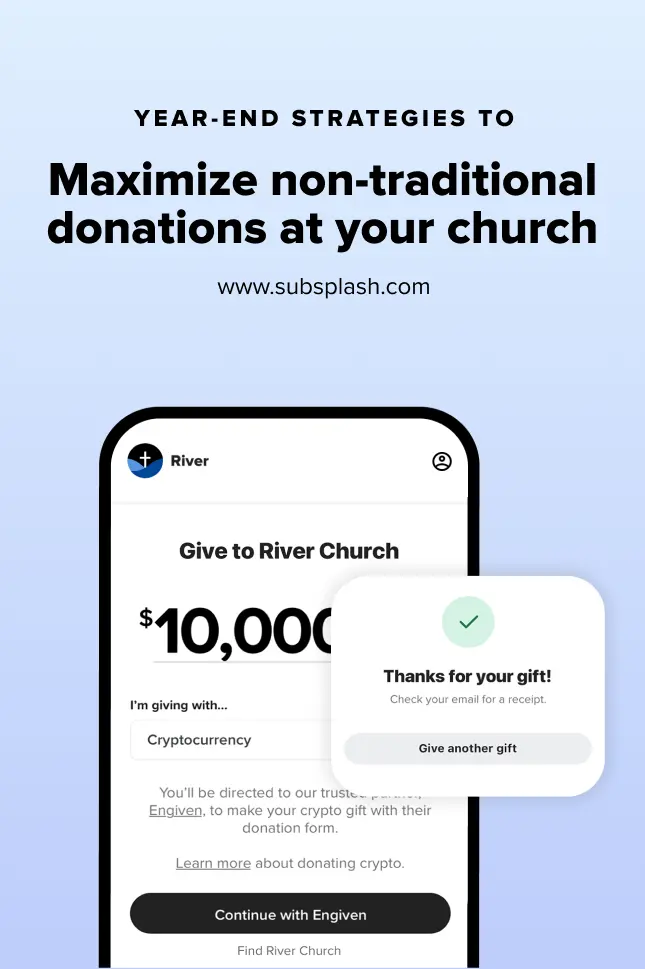
Crypto donations are growing rapidly, particularly among younger, tech-savvy members. They receive the same tax treatment as appreciated stock but require a secure digital-wallet solution.
Tangible property
Tangible property—like vehicles, art, and collectibles—can also be donated, though deductions depend on whether the item relates to the church’s mission.
Pro Tip: Establish a simple gift-acceptance policy stating which assets require board approval or third-party facilitation. Partnering with organizations like the National Christian Foundation or similar foundations can streamline complex transfers.
5. Make it easy to give non-traditional donations through digital infrastructure
Even the most generous intent can stall if the process feels confusing. Churches that remove friction and provide clear online pathways consistently see higher follow-through rates for non-traditional gifts.
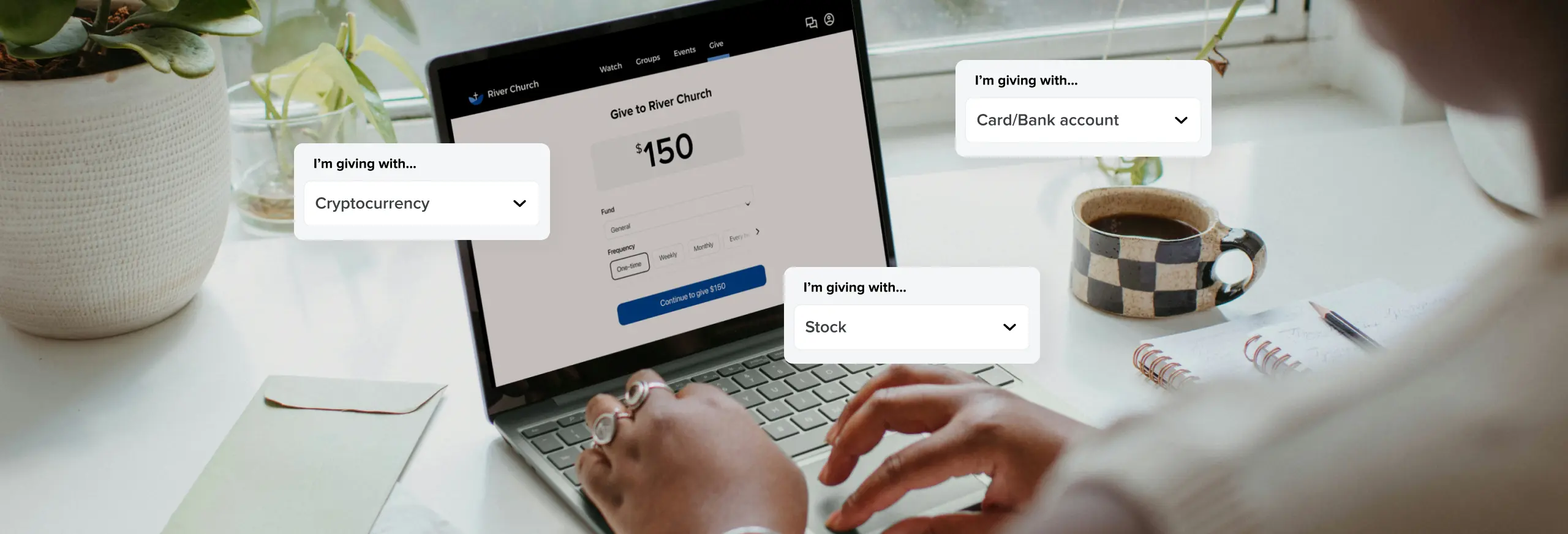
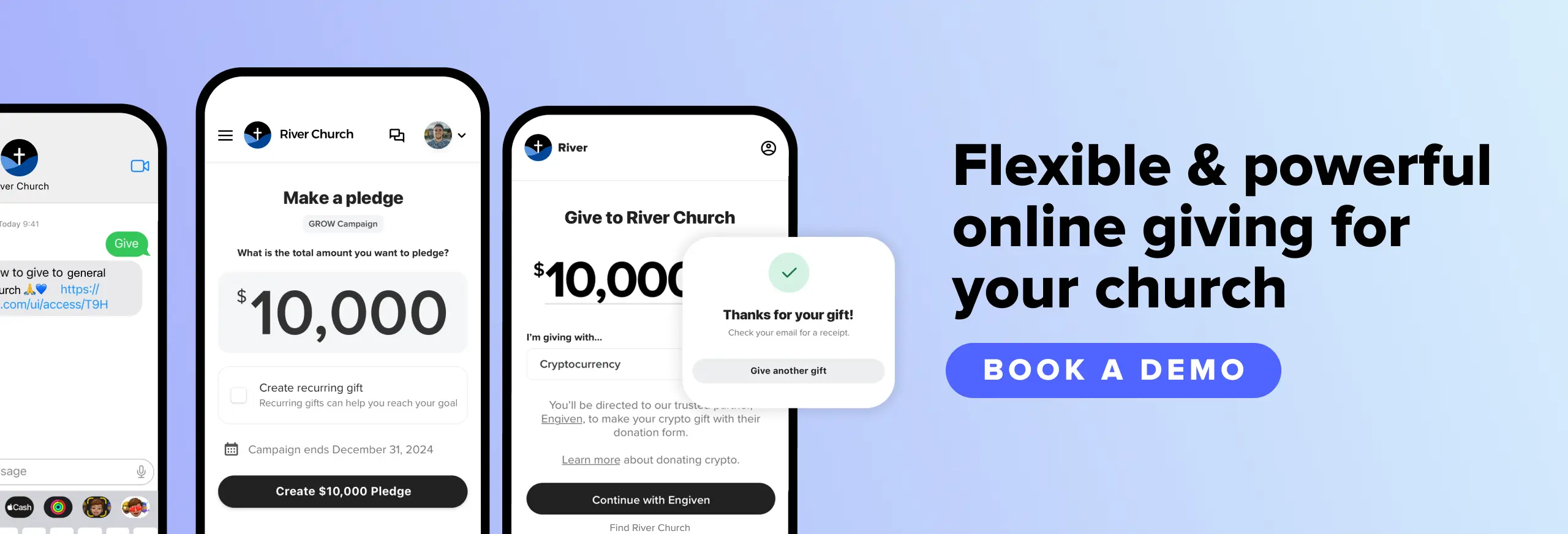
This means creating a dedicated online giving page, through a platform like Subsplash, that includes all of the major asset types, including QCDs, DAFs, and stock gifts, with straightforward URLs like churchname.com/online-giving. The page should also list legal details, deadlines, and contact information, plus an embedded form so donors can indicate their intent.
You should also find ways to capture intent before the donation process. That’s because many of these gifts move through third-party custodians. So, churches often don’t know a donation is coming until the check arrives. Intent forms close that gap.
Then, automate the follow-ups and reporting. This is easy to do in a church engagement platform, like Subsplash.
- Segment donors by age or giving type (for example, everyone 70 and older).
- Schedule reminder emails throughout Q4.
- Track non-traditional giving trends year over year.
6. Communicate clearly & consistently
If you want to maximize donations, then you need to communicate early and often throughout all of Q4. Here is a basic plan that you can follow.
October: Educate & equip
- Hold an internal planning meeting to confirm processes and assign roles.
- Launch your non-cash options on your online giving pages.
- Send a soft-launch email to leadership and key volunteers explaining the campaign’s purpose.
November: Inform & inspire
- Send targeted emails to RMD-age donors explaining QCDs.
- Add a short announcement to services and newsletters.
- Host a finance or stewardship seminar with a guest advisor.
- Share a real example or two from previous donors in your emails & seminars.
December: Remind & reinforce
- Issue two or three short, deadline-driven reminders by text, email, social media & at in-person services.
- Have the executive pastor personally call or email your top donors.
- Use language that blends stewardship with opportunity
7. Measure success & plan for next year
Once the New Year hits, take time to analyze what worked. Measuring impact transforms one-time efforts into repeatable systems.
This means first looking at your numbers, like:
- Total value of non-cash gifts received.
- Number of donors using QCDs, DAFs, or stock transfers.
- Average gift size compared to traditional offerings.
- Engagement indicators—including event attendance, email open rates & web-page traffic.
Once you have the numbers, then do a debrief with your staff. And ask a series of questions, like:
- Which communication channels drove the most action?
- Which donors responded fastest?
- What obstacles slowed the process?
When tracked consistently, these gifts often grow exponentially, especially as members who’ve given once continue each year.
Making year-end generosity stick
While weekly offerings remain vital, much of today’s donor wealth lives in investments and retirement accounts. Churches that understand and embrace this reality position themselves for long-term health and deeper engagement with their most committed givers.
The framework to do this is simple:
- Identify and engage the right donors early & often.
- Educate them about tax-smart giving options.
- Facilitate the process with clear tools & communication.
The best part is tools like Subsplash make it easy to do all of this. With the right infrastructure in place, your ministry can encourage generosity that funds your mission for years to come. See how Subsplash Giving makes it easy to accept non-traditional donations—connect with a ministry consultant today.
Simplify generosity and multiply growth with Subsplash Giving. [.blog-contact-cta]Book your free demo today[.blog-contact-cta]!

%20for%20churches.webp)

