







Are you wondering how to lead a small group Bible study? Or, perhaps you’re getting plugged in at your church and are thinking about hosting a small group Bible study but don’t know where to begin. We’ve got you covered!
Leading a small group Bible study at church is a meaningful and rewarding experience. It’s an opportunity to grow in faith alongside others, spark meaningful group discussions, and help people encounter the truth of God’s word.
Beyond spiritual growth, your small group is a powerful outreach tool—inviting others into authentic community and ultimately pointing them to Christ.
Let’s take a look at some important considerations and questions when you’re preparing to lead. Whether you’re a first-time leader or simply looking to refresh your approach, these key insights will help you lead with intentionality, confidence, and purpose!

How to lead a small group Bible study
1. Understand the Christian significance of community
To fully understand the importance of Christian community and the theological significance of gathering together as believers, it’s important to know why community is so essential to the Christian faith.
If you’re interested in leading a successful Bible study, take time to review books on small groups and community, such as:
- A Field Guide for Genuine Community: 25 Days & 101 Ways to Move from Façade to Family by Ben Connelly
- Living into Community: Cultivating Practices That Sustain Us by Christine Pohl
- Called to Community: The Life Jesus Wants for His People edited by Charles E. Moore
2. Consider your role as a leader
A great Bible study group takes thoughtful intention and care, and sometimes even months to prepare. Consider your role as a leader, prayerfully seeking God for guidance. Are you there to simply facilitate discussions, ask important questions, or lead your small group as the “expert” in a certain area?
Regardless of what you choose, it’s important to anticipate how you can be the best small group leader possible. Make it clear up front what role you will play and how you will contribute to the group and lead as a whole. Ask your church if they have training materials or classes on how to lead a small group Bible study.
3. Choose the right topic
Third, choose a small group Bible study topic you’re comfortable with. For instance, if your small group topic is on atonement but you’re not totally sure what that means, it may be helpful to have a co-host who knows that topic well, or it could be prudent to choose a new topic altogether.
When tackling certain issues and topics in the Church, it’s important to have a solid biblical foundation and spiritual maturity. Leading discussions on complex or sensitive topics—like atonement, suffering, sexuality, or spiritual gifts—requires not only scriptural understanding but also humility, compassion, and the ability to guide others through Scripture rather than personal opinion.
If you’re uncertain, seek trusted resources, mentorship, or training, and never hesitate to ask for support from your church leadership. A well-prepared leader fosters trust and helps create a space where participants feel safe to ask questions and grow in their faith.
4. Consider your resources & format
Next, it’s important to consider the format of your small group Bible study and the types of resources to utilize. Some questions to ponder when planning a new small group:
- Does your Bible study include a video series, a workbook, or a study guide?
- Are participants expected to buy their own materials?
- If you and/or the church are supplying materials, can you buy in bulk at a discounted rate?
With a video series, make sure you pay attention to the lengths of the teaching videos. Some videos are only three minutes, while others can run up to half an hour. Plan your small group time with this in mind.
Sometimes, choosing a study with a video series format puts you as the leader more in a “learner” role as well and relieves you from the task of being the “expert” on a topic. If you want to learn more about a certain issue and would like a theologian or expert to teach, disciple, and guide you, then choosing a video series format may be ideal.

5. Decide on the length of time
Many churches have a small group “season” like spring and fall in which leaders host weekly meetings as long as the season allows. After that, any small groups “end” for the summer or winter break and pick back up later on again. However, some churches allow leaders to host their small groups year-round.
Think about how many times you want your group to meet—this will help you decide the type of group you’ll lead and how long it will run. Will it follow a seasonal schedule, run for a short term (about 4–6 weeks), or be a long-term “life group” where members commit to staying together indefinitely? Deciding this in advance lets you set clear expectations, build a schedule that works for you, and meet the needs of those attending.
Whether your group meets for a short-term study, follows a church-wide season, or commits to long-term discipleship, having a clear plan from the start builds trust, encourages consistency, and helps everyone stay on the same page.
6. Know your audience
Determine who this small group is for and if it matches the needs and demographics of your community. For example, if planning a small group Bible study for women, you may want to consider these questions:
- Is this group geared towards a specific age range or period of life? (Such as students, seniors, or young moms)
- Is childcare available?
- Are friends, visitors & non-believers welcomed?
- Is this exclusively for church members?
- Will this small group be focused more on maturing in faith or community outreach?
As you can see, there’s a lot to consider when thinking through how to lead a small group Bible study! That’s why it’s crucial that you know your audience and whom you’re speaking to so you can choose the right format, tone, and content that will best serve your group.
Whether you’re ministering to seekers, seasoned believers, busy parents, or a mix of all three, tailoring your approach to the people in the room will make your small group more impactful, engaging, and spiritually fruitful.
7. Choose a location
Have you thought through where your small group will be located? Some small groups meet weekly on church premises, while many small groups are hosted in someone’s home and personal space. There are several pros and cons when choosing either of these options.
First of all, hosting a small group at your church allows leaders to invite the community into the church space throughout the week. If you’re coordinating on a night with other groups, such as Wednesday nights when youth groups meet, childcare is frequently provided by church volunteers. Leaders can turn to a comfortable meeting space, often complete with long tables and equipment needed for setup.
On the other hand, hosting a small group at your home is a great opportunity to invite the church into your space and make visitors feel at home and cared for. Home environments can create a warmer, more intimate atmosphere that fosters deeper relationships and encourages open, authentic conversation.
Whichever location you choose, it’s important to consider what will best serve the needs of your group and help create an environment where people feel welcomed, focused, and free to grow spiritually together.
8. Create a welcoming environment
Lastly, it’s important to consider hospitality. Many small groups take place in the evenings after work—and great food is a great way to break down barriers!
Offering a meal or snacks every week at your house, or planning on a food schedule or a monthly potluck, is a great way to get your participants hands-on involvement. Food can be used as a beautiful way to minister to people who are struggling or need support. By doing something as simple as providing a warm meal, your small group can be a beacon of hope and joy that participants look forward to every week.
You could also consider offering coffee, tea, punch, or other simple refreshments to create a welcoming atmosphere that encourages conversation and connection. Even small touches like a cozy setup, soft music, or thoughtful decor can make your group feel more like family.
Ultimately, this isn’t about perfection—it’s about creating a space where people feel seen, valued, and cared for.
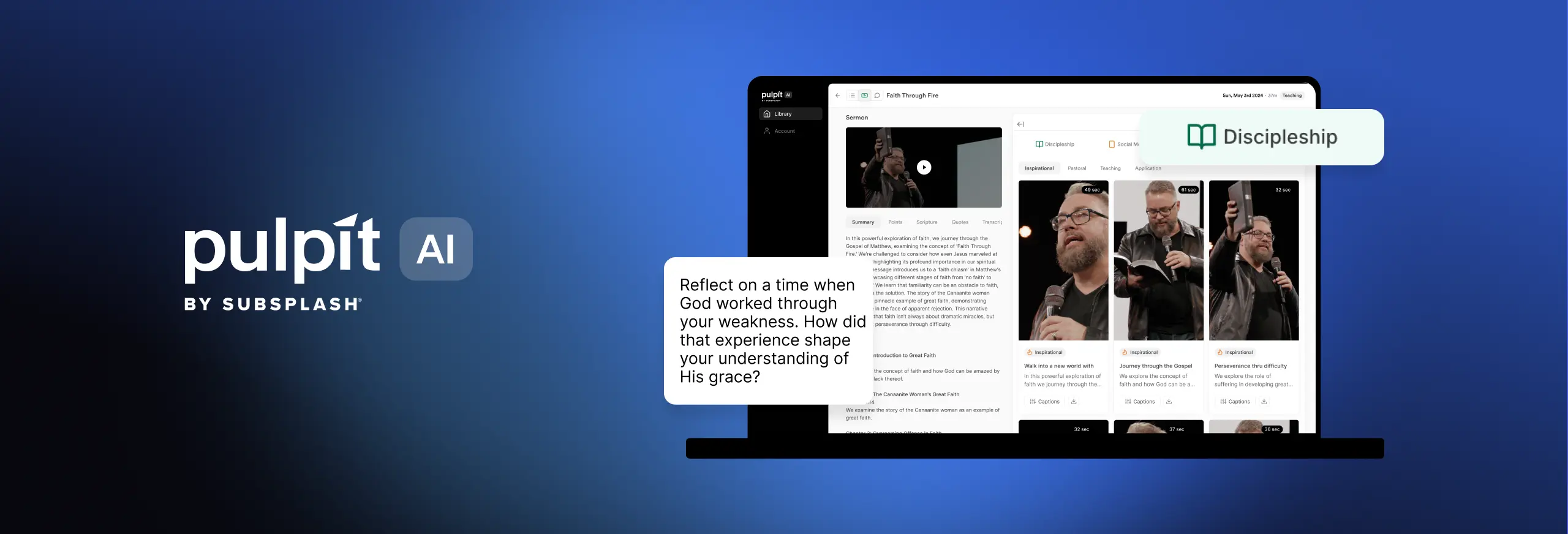
BONUS! Turn sermons into group resources with Pulpit AI
If you’re a pastor, you can turn your sermon into small group guides through Pulpit AI! Easily turn your sermons into dynamic small group guides and more, all in your voice.
All you have to do is upload your sermon—whether it’s audio, video, or text—and Pulpit AI instantly generates over 20 content pieces, including sermon recaps, five-day devotionals, discussion questions, and plug‑and‑play small group guides. This means your groups can engage deeply with the sermon content all week long, and leaders don’t have to create materials from scratch.

Small group leaders change lives
Starting and leading a small group Bible study may feel overwhelming at first, but with prayerful preparation, thoughtful planning, and a heart to serve, it can become one of the most impactful ministries in your church community.
Remember, you don’t have to have all the answers—you just need to be faithful, available, and willing to lead others toward God. With the right mindset and tools, you’re well on your way to creating a small group that truly makes a difference.
So take a deep breath, trust the Lord, and get ready to see lives changed—starting with your own!
More resources you may find helpful
- Streamline your fall small groups with new features on Subsplash Groups
- Church membership 101: How to join a church
- From hello to plugged in: How to simplify & supercharge your church’s next steps class
- Welcome to church: 10 ways to make your visitors feel at home
- Church hospitality in a digital world: How to attract & delight new visitors
.webp)
.webp)

%20features%20for%20a%20thriving%20church.webp)
.webp)
.webp)