
Fill out the form below to schedule a demo or call our sales team at
469-564-3922

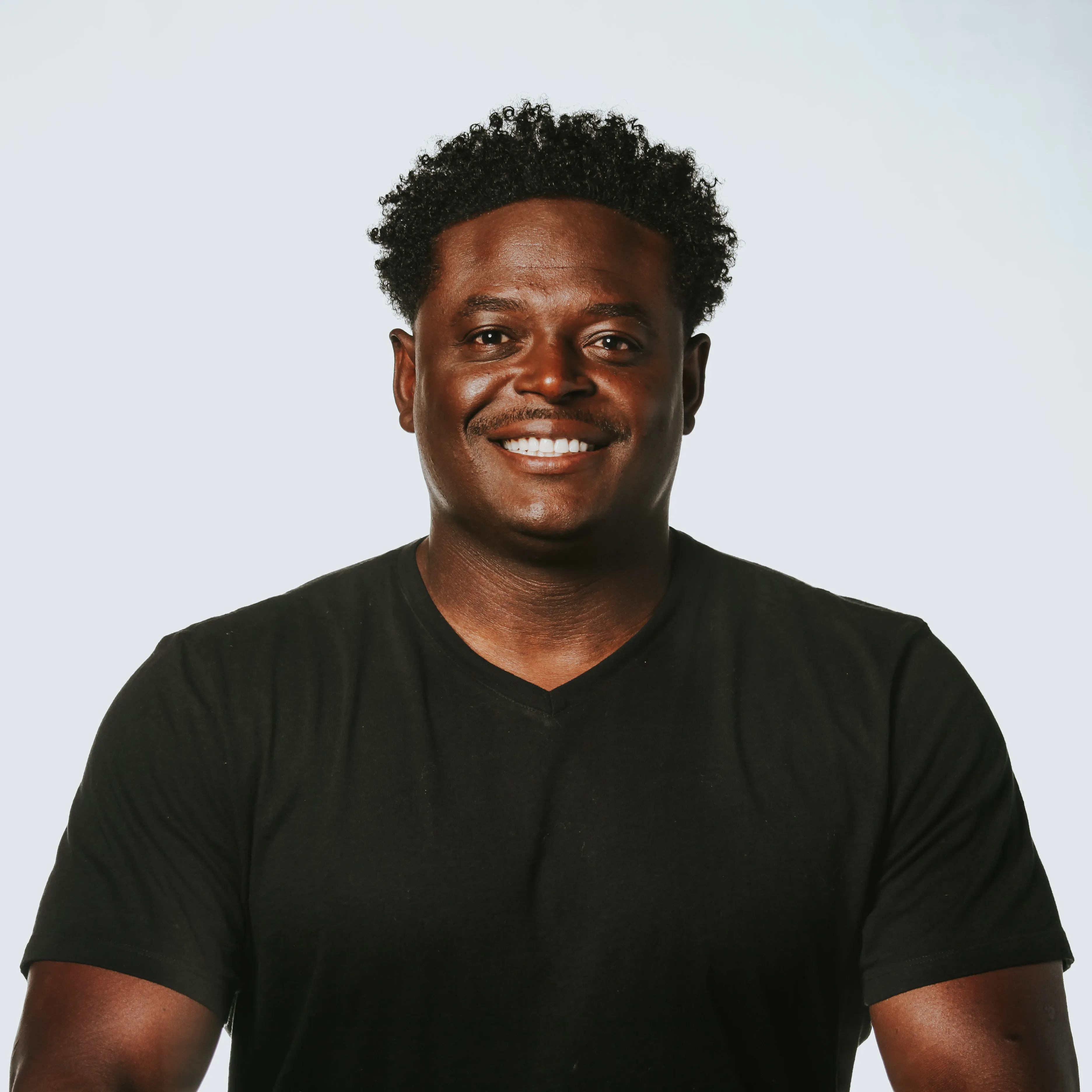
28. That the world will know—The gospel witness of the multiethnic church (with Derwin Gray)
Episode Description
In a divided culture, churches have an incredible opportunity to display the gospel to a watching world. Join our conversation with Dr. Derwin Gray, lead pastor of Transformation Church, to learn how pastors can overcome the three biggest obstacles to building a multiethnic church.
Learn more about Derwin Gray: www.derwinlgray.com
Learn more about Transformation Church: www.transformationchurch.tc
Episode Transcript
VO: It's equipment, engage a podcast by Subsplash, exploring how ministry technology and innovation come together to equip churches around the world to engage their communities.
John Crabtree: Hello everyone. And welcome to another episode of equip engage. I'm John Crabtree. And today I'm hanging out with our VP of marketing communications, Nick Bogardus. How's it going, Nick?
Nick Bogardus: Well, great, John. It's awesome to be here. [00:00:30] I'm super excited for this conversation with, with Darwin. Um, Subsplash we believe that the truth of Jesus through the life of the local church is the greatest source of hope and joy for humanity. And we're really leaning into that conviction in this conversation today. Uh, we're going to be exploring how in a world that is so polarized, so divided along so many different lines. How can Christians the, uh, an example of a model of diversity and particularly a multi-ethnic [00:01:00] church in such a polarized
John Crabtree: Totally. And I'm just really excited for how our guests can speak to that. Dr. Derwin L gray. Who's joining us for the second time on the podcast today. He's the lead and founding pastor of transformation church, uh, right outside of Charlotte, North Carolina in a previous life. He was also an NFL player for the best team. There is Indianapolis Colts. Anyway, primarily why he's with us today is because of his book building a multi-ethnic church. And pastor Derwin has a powerful [00:01:30] and even prophetic voice on this topic. And he's going to be offering so much wisdom for pastors today.
Nick Bogardus: At the end of the conversation, we ask him for three obstacles that many churches face, many church leaders face when they are, uh, driving towards reflecting God's intention and the gospel of being a multi-ethnic church. And he lists three obstacles. The first was going too fast. The second was not having a theological foundation and the third is not having coaches or mentors. [00:02:00] And for those who are listening, if you pay attention, what's amazing is if you listen to Derwyn's answers throughout the conversation, he basically unpacks those obstacles and gives you helpful, uh, ways forward in them throughout the entire conversation. Particularly I loved, uh, his continual emphasis, uh, throughout the, the explanation of a multi-ethnic church, that our goal is not diversity. Our goal is an identity in Christ and a community that reflects Christ and out of that comes diversity that by making diversity the [00:02:30] goal, we actually create a whole other idol and he does just a fantastic job of unpacking that for us.
John Crabtree: All right, Nick. Well, let's dive in pastor Derwin. Welcome back to the podcast.
Derwin Gray: Hey, thanks for having me. It's always good to be with you guys.
Nick Bogardus: Yeah. During what I know you and John spent some time together previously, so, uh, it's really good to meet you and I'm excited to talk to you today.
Derwin Gray: Me too, as well, man. And, and I'm digging like the salt and pepper of your beard, mustache, goatee. I mean, it's a sign of impeccable wisdom. [00:03:00] I like it. Plant a couple churches, have a few kids that comes out. I think brother, Hey, let me, Hey, listen, listen, planting churches, serving churches, being pastors lead pastors is a, it's not for the faint of heart. You have to have, um, gospel courage and gospel conviction, uh, rooted in Christ himself 150.
John Crabtree: Amen. Amen. Well, I still have some work to do on my salt and pepper apparently so. Well, Derwin, it's been about a year since our last conversation [00:03:30] in September, 2020 to put it mildly. It has been quite the year, the, the election, the ebb and flow of the pandemic crises in Cuba, Haiti, Afghanistan, uh, in the midst of that, you've released another book and incredibly helpful. One in timely at that called building a multi-ethnic church. What has been the experience leading and pastoring in the past 12 months?
Derwin Gray: Oh man. You know, uh, before I answer that question, you know, for [00:04:00] pastors and ministry leaders that are listening and just people in general, right? If you feel off balance, if your anxiety has increased, if you feel unsettled, if you feel broken, uh, you felt like the rest of us and you know, this isn't to say there has not been hard things before. It's not about comparison. It's about what is, and then specifically as I, as I speak to pastors and ministry leaders, um, not only [00:04:30] is it, is it hard like one week you don't know if services are going to be in person, you know, if it's going to be online, you don't know who's mad at you because you won't wear a mask because you wear a mask and people mad. If you do vaccines. And then we've got earth quakes and poor Haiti.
Derwin Gray: We've, we've, we've, we've got the debacle in Afghanistan. We're still in the midst of a divisive election that unearth all of the infection of, uh, racial injustice. And so I think it's really important for [00:05:00] leaders really important for all followers of Jesus to make sure your soul is good to make sure your heart is good to make sure that you're not running ahead of Jesus, but that you are abiding in him. And remembering that he said in this world, you will have trouble, but take courage for, I have overcome the world. And so we can rest in his nail pierced hands. Uh, but yeah, it's, it's been utterly bananas. You know, we, uh, externally [00:05:30] we've grown like crazy and give things been up and broadcast is everywhere. Then we came back to meet again and we're having to put back on mask and you know, there's just a lot of dynamics. There are tensions and church staffs just like in homes. And I think that's what we have to remember daily as Romans 13, 14 says to put on Christ Jesus, like we have to put on Messiah Jesus and Paul uses that illustration of an intentionality [00:06:00] of trusting and abiding in him.
John Crabtree: That's a good word. Can we start with the big picture, uh, specifically around building a multi-ethnic church. Now, can you give us the gospel centered vision of what it means to be a multi-ethnic church?
Derwin Gray: Yeah, I will. I will try to do my best. And so what I'm going to do is I w I want us to run over to Paul's letter to the church at glacier, right? This is just incredible Jew Gentile [00:06:30] multi-ethnic church multi-class church. And he says something really profound. It gets overlooked in Galatians three, eight. He says this for the gospel was preached before hand to Abraham in this, all the nations would be blessed. So the apostle Paul attaches the life death, resurrection of Jesus to God's covenant with Abraham, because Genesis [00:07:00] 11 God's families scattered in Genesis 12, God is saying, I'm getting my family back and through Abraham, Abraham, Isaac, Jacob, the nation of Israel comes and then the seed of Abraham, the true Israelite Jesus comes. So Jesus, Jesus, Jesus comes and he lives the sinless life. We could never live. He dies a atoning sacrificial death on the cross. He raises again to give [00:07:30] the father this redeemed multi-ethnic justified family that is now the temple of God on
John Crabtree: Earth. It's incredible.
Nick Bogardus: I hear you kind of recapturing a, a vision for God's intent for his salvation to be extended, toall peoples all places, all times
Derwin Gray: It is. And one of, one of the, and I hope this comes across, right? One of the weaknesses of evangelicalism is we've [00:08:00] deduced the good news to simply Friday. And what I mean by that is Jesus. On a cross, he is our propitiation. His blood is justifying and we kind of stop there and salvation, uh, the work of the cross, according to Ephesians, two 14 through 16 is Christ is our peace. And he broke down the dividing wall and threw his body on the cross. You know, [00:08:30] he made the one, two, he broke down Haas sterility. So the life death and resurrection of Jesus is so the father can have a family that is in dwelt by Jesus, the spirit and the father. And so we have a very individualistic view and that's why our discipleship gets short-circuited because it's like, well, okay, I need to grow.
Derwin Gray: So I can be a better dad and I can be this. And I began to be this versus sanctification is this [00:09:00] I'm born again into the family of God. And I'm being formed by the spirit of God to take on the character of Christ so that I can be a good brother in God's family, to my brothers and sisters of different ethnicities, different socioeconomic classes, because the world will know that you are my disciples. If you love one another, how do I know if I actually love the other, if I'm not in relationship with the other,
Nick Bogardus: [00:09:30] And I'm curious what you would say about, um, w w how our vision gets so smaller, narrow, you know, is it a conditioning thing? Is it just kind of laziness or apathy? Like w what do you think it is?
Derwin Gray: Yeah, well, uh, my mentor getting my master's was Dr. Norman Geisler. And so he's the father of modern day apologetics, and even gelical philosophy, you know, he taught me, tell him this to philosophy. He's brilliant. And so we would ask him questions, like, [00:10:00] like, like, doc, how did this happen? He goes, the devil. We're like, we're like, no, no, no, come on, give us some. He goes, no, the devil, there are dark demonic forces that if dark powers can not take your salvation, they can take the joy of your salvation. And so, uh, James two 19 says that even the demons believe in God. And let's remember in Matthew four, when Jesus was retracing, the steps of Israel after he was baptized Satan challenged him [00:10:30] three times, quoting scripture. So Satan knows scripture, too. He just misapplied it. And Jesus would say, as it is written, right?
Derwin Gray: So what's happened is we've taken a good thing, right? Believe in the Lord, Jesus Christ, you shall be saved, right? Um, well, what does shall be saved me? And so what I want to say, Nick is this. We must never forget that the work and life of Christ is rooted in this cosmic redemptive story. That [00:11:00] God is a covenant keeper. He's a promise maker. Abraham has a seed in that seed is Jesus. And he goes, and he does everything that we could never do to reconcile us unto God and to one another. But here's the thing though, Nick and John is in a westernized society soaked in rugged individualism. We're more concerned about me than the wee. Whereas the Bible is a communal book, just [00:11:30] like the father, son and holy spirit or the divine community. Well, all throughout the new Testament, you know, for example, Jesus says, when you pray, pray our father forgive us of our sins. And so that's why we're called the body of Christ. A lot of times, the way we preach Christianity is there is a bunch of eyes and hands walking down the street without a body. And it's weird.
John Crabtree: And to your point in your book, you, you talk [00:12:00] about this incredible stat that by the year 20, 50, 70 2% of Christians are projected to live in Africa, Asia and Latin America, and much of the remaining 28% will have roots on those continents. And many people have this misconception that Christianity is a Western faith. That probably couldn't be further from the truth. It's so talk more in that
Derwin Gray: You can, can, yeah. Can we be a little bit more blunt, John? And, uh, [00:12:30] oftentimes particularly in the African-American community, it's like, well, Christianity is a white man's religion. Right, right. So, so let's just, let's just pause here for a minute. Um, the nation of Israel, the Jews are sematic middle Eastern P P P people. Jesus was a normal looking Jew, right? So he's olive skinned, he's he's brown. Right. And when you look at let's just look at the book of acts. [00:13:00] Um, there was an Ethiopian UNIC who took the gospel back to Africa, right? And when you look at church history, um, for example, affectatious tenacious, cultivated and curated from scripture, the understanding of the incarnation. Well, his proponents used to call him the black dwarf cause he was a short black, African Athanasius was African Cyril of Alexandria [00:13:30] was Northern African. Most of the great early church fathers were from Northern Africa. Let's not forget the great Saint of Gustin. And so what's interesting is what started out as a middle Eastern, Northern African faith has gone all the way around the world. And it's like, come back to its origins. The oldest Christian community in the world is the Coptic church in Egypt.
Nick Bogardus: Yeah. I think there's two kind of [00:14:00] related, um, misconception exposing in instances in my life, Derwin to those points like, uh, the first was, and I'm sure other people have had, um, similar experiences on mission trips. Uh, but my wife and I lived overseas in Mongolia for a year and a half when we first got married, she was in the peace Corps. Um, and it was the first time I'd lived in a developing country in Asian country. post-Soviet CA I mean, it was like everything opposite. You [00:14:30] could possibly imagine for an orange county kid. Right. And I'm sitting in this church and the th the Christians who had been there had only been Christians for 15 years because they were, it was planted by these Swedish Lutherans. They came over, uh, and every Sunday I'd go to church there. I couldn't understand a thing, but they would sing these like, uh, you know, American Matt Redmond, Chris Tomlin worship songs, because that was all they had.
Nick Bogardus: They'd only been Christians for 15 years. They hadn't written their own material yet. Right. And so one Sunday I was listening and I was, and as I [00:15:00] was kind of singing along with them, I realized, oh my gosh, I pictured heaven in English. Like, I don't, like I kind of come to terms that like, of course, like heaven's going to be all tribes, but I miss the all tongues part, you know? Uh, and so like, just that assumption that I brought into the picture, like was exposed or was like, I had, I not had that experience. I wouldn't have felt that I had built heaven around Mike, my own individual experience. Right. And then when I went through my church planner, um, residency [00:15:30] out in Arkansas, um, I had a good friend named Jerome gay who's out in Raleigh. I don't know if you've ever come across
Derwin Gray: Jerome. Jinja drum has the biggest biceps that the side of New York.
Nick Bogardus: And, uh, you know, one, one day we had a conversation maybe a year and a half ago. And he was like, you know, Nick, like, um, he was, he was kind of riffing on what you were just saying when he's like, when I was in seminary, all the pictures of the books that we read were white guys, but they were actually black. [00:16:00] Like they were north African church fathers that every like iconography or, um, you know, biographical picture on the back of a book sleeve, uh, often showed them with the Caucasian skin tone. And I'm like, again, that just exposed, like, man, what don't I know about church history and how small is my view of, of Christianity.
Derwin Gray: Yeah. You, you know, Nick and I think that takes a lot of humility, which the Christian, the path that [00:16:30] the Christian walks is one of humility because that's what our savior did. Right. And so there's some things that we have to unlearn learn and relearn. And that's one of the beauties of God's global diverse family. And I think Western American Christians get, okay, let's take the gospel over there, but we're not sure we want them to come here as immigrants though, or, well, I'll [00:17:00] go to Africa and build a house, but I won't go to the black church around a corner from my house. And so it's almost like we've created these silos. And one of the, one of, one of my dreams for building a multi-ethnic church is, is for people to read it and go, oh my gosh, I had no idea of the bigness and the beauty of the gospel to bring different people together [00:17:30] for the sake of Jesus Christ.
John Crabtree: It's, it's amazing in, and that kind of leads to something that you talk a little bit about in the book, as well as we're just recording this. It's been over a week since the Taliban reclaimed control of Qubole after the collapse of the Afghan government, and many people are worrying for their own safety women, children, minorities, among those minorities being targeted, or Christians in Afghanistan, experiencing [00:18:00] persecution for their faith, as horrifying as it is. How does this element to persecution play a role in increasing the multiethnic makeup of the big C church and helping to build multi-ethnic little C churches?
Derwin Gray: Yeah. You know, before I dive in, uh, I, I just, I just want to say to my heart is deeply grieved for not only my brothers and sisters in Christ, in Africa, Afghanistan, but the Afghan people, um, you know, I I'm, [00:18:30] I'm, I'm not a geopolitical expert. One thing that I do know is Russia tried to go into Afghanistan and nation bill. They got kicked, kicked out. We've been there 20 years. And, uh, it's important to understand, particularly for American, the reason why America can have a democracy is because the underlying worldview allows it. Sharia law does not allow a worldview that would lead to democracy. And so my heart [00:19:00] hurts for the women, the little girls who can't learn anymore, the women who have to wear burkas and who, um, if that's not what they want to do, have to be escorted by men and just the brutalness of the Taliban.
Derwin Gray: And they are going to go after followers of Christ. And I think that's one of the biggest reasons, um, for the power of [inaudible] Christianity is you're, you're so afraid of it. You want to snuff [00:19:30] it out. Uh, but the blood of the martyrs is the seed of the church. And I'm just praying that there is a revival and a movement in Afghanistan that God just does. Some miraculous things. Even right now, I pray that God is doing miraculous things to build his church, to build his people and to display his presence. And so I think one thing that hopefully this is making us American Christians understand [00:20:00] that America is not the epicenter of Christianity, that there are Christians all over the world. And so when I've traveled internationally, whether India or Germany or Denmark and Norway, I'm just blown away by the beauty and the diversity of that. Um, but that's also a wiring in my heart because of my theological convictions rooted in God's covenant with Abraham. And I hope that the book inspires [00:20:30] people to see that Christianity is bigger than me. I get to go to heaven when I die, but actually God not only forgives your sins, but he puts you in a family with different colored skins.
Nick Bogardus: And if I could sum up maybe during the foundation beneath that vision, I mean, I hear, I heard you paint a huge, like, I mean, just huge, beautiful foundation for that of God is a covenant keeping God who always intended his salvation to be extended to all peoples. I hear you giving examples [00:21:00] from the new Testament, uh, from Galatians of, even in the early church, this was God's intention. And then I hear you giving pictures sort of like church fathers, and then even current day, like there, the church has always existed and still does exist in, in the vast majority of the world in a multiethnic, uh, I guess, reflection of God's intention. And I hear that beneath your vision, which is something we often lose. And I think that's a compelling thing to reiterate.
Derwin Gray: Yeah, [00:21:30] it is. And, and specifically, specifically, I wrote building a multi-ethnic church for the American church because America and the American church has been so racialized and divided. And I'm trying to write a gospel shape, theologically driven, treat a seize on why this is true with practical applications, because, because the local church [00:22:00] is a community of people, right? And these community people gather, and then they scattered. And as we scatter we're to be salt and we were to be light. And so what we'd like to say at transformation church is this is that Sunday is just the huddle. Now it's time to go out and play the game. And so we gathered, but then we scattered to take this Jesus centered, grace soaked multiethnic understanding into real life [00:22:30] to be blessed are the peacemakers for, they will be called sons and daughters of God. Like one of the defining characteristics of the people of God is you're a peacemaker, not a peacekeeper. A peacemaker looks like Jesus, going to the cross, looks like Jesus and God, I'm coming to make peace through my sacrifice and resurrection and sadly, uh, guys, and you know this as well. And, and I'm not trying to beat [00:23:00] anybody up, but man, going on to social media and Facebook, I see Christians trying to convert people to add Ty vaccine, a vaccine, to get vacs, to mass, to Republican, to Democrat. If, if, if, if we were preoccupied and intoxicated with Jesus, the way we are about politics, our country might actually change.
John Crabtree: We know that this year has presented overwhelming [00:23:30] challenges for many pastors and church leaders, never before have church leaders in churches needed to exist nearly equally in two domains in person and online at Subsplash. We believe that the truth of Jesus through the life of the local church is the greatest source of hope and joy for humanity. And we're passionate about equipping you with the tools you need to stay focused on your ministry. You lead the mission will lead the technology to connect with our team and get started with powerful, simple [00:24:00] to use tools for more effective digital discipleship visit subsplash.com/go that's subsplash.com/g O. Now back to the episode, you know, cause it was Dr. Martin Luther king Jr. Who said in 1963, that the most segregated hour, um, uh, of America is 11 o'clock on Sunday morning. And nearly 60 years later that that's still the case [00:24:30] with the 86% of American congregations being mono-ethnic. And so why do those remarks still matter now? Third one in and what's at stake. If we don't put more energy towards that.
Derwin Gray: Yeah, yeah, yeah. Let me, let me add a little insight. Uh, in chapter one of my book, I gave some updated statistics, so there has been some progress. So currently 58% of churches, which are considered a mega church, which is 2000 members are more, 58% are considered [00:25:00] now multi-ethnic, which means 80% of one ethnic group does not. It doesn't go above 80%. So in those mega churches that are now 58% multi-ethnic, which is a good thing, yay, let's clap up. 90% of the pastors are white. And so what's happened since 20 16, 20 18. And even now is when there have been things like George Floyd, when there's been things of racial strife, [00:25:30] the majority culture, white pastors have not addressed those things and black people and people of color have actually started to leave those churches because it was multi-ethnic in, in, in presentation only. So there has been progress, but unfortunately it's been more shallow and it hasn't actually dealt with the deeper issues.
Derwin Gray: [00:26:00] And so what happens is when you're the majority culture, um, because things go your way, you don't really think about the other. And so it's a spiritual discipline to think about how, what somebody else who was not my ethnicity and my culture view, what just happened. And so for black Americans to see the Confederate flag in the U S Capitol was generational trauma being revisited. And from the pulpit we needed to hear [00:26:30] white pastors say the Confederate flag is a sign of evil. It's a sign of treason. It's a sign of wanting to keep human beings, made an image of God in slave. Then there is no place for it.
John Crabtree: Yeah. I mean, that's powerful. And, and, and maybe then, you know, what, what it seems like is at the leadership level of churches, does the multi-ethnicity they're matched the multi-ethnicity and the pews.
Derwin Gray: Yup. [00:27:00] Yup. And so typically in the mega church, that's, multi-ethnic the answer's no. And so one of the things that I point out in the book and thoroughly give practical steps too, is that if you want to build a multi-ethnic church, if you want to transition a model church into a multi-ethnic church, number one, it's prayer and fasting, number two, it's a deep dive into what the holistic nature of the gospel is. And number three, just like an acts chapter six, and in acts chapter 13, your leadership team, or [00:27:30] the people with influence have to reflect what you want your congregation to be. So for example, my first hire at the time, 11 years ago was a 55 year old white man, who was my executive pastor, you know? So, so that spoke volumes. He was older. He had wisdom. I didn't have, he had, he has a son that's not so much younger than me, right?
Derwin Gray: So he had wisdom, but it also spoke volumes that are older, white men would be under the leadership of a younger black [00:28:00] man. Like, Hey, we're serious about this. Now he didn't get this role simply because of affirmative action. He got it because I affirmed the right action, find the best person pray in the best part per person. And he happens to be an older white men. And so our staff has to be reflective of what we want to see, because what you celebrate and what people see is what gets gets repeated. And we see this in acts chapter six, and we see this in acts chapter 13. And so a part of [00:28:30] leading a multi-ethnic church is taking the time to learn about people's ethnicities and cultures and where they're from, but then representing that as well.
John Crabtree: That's a great word for church leaders today.
Derwin Gray: Well, you know, the Bible is a really good book. There's a lot of good stuff in there.
Nick Bogardus: I'd love to hear, uh, maybe coming back to that vision, like what's the opportunity here for, for churches to embrace a multi-ethnic church because, um, [00:29:00] I agree with you that there are significant problems, uh, more deeply rooted and more broadly, um, uh, more broadened scope than we probably acknowledge or care to admit. Um, how, how can we turn from looking at here's all the problems to, well, if we did this, then here's what it could be, right? Like, um, how is the church uniquely positioned to be a [00:29:30] example of unity diversity in a polarized world in, in that Facebook comment world, how can the church replace and give a vision for what that could be?
Derwin Gray: Yeah. You know what, um, it's, it's the beauty of being an incarnational presence. Jesus said the world will know that you're my disciples because you love one another, uh, God, uh, we tend to think love is sentimental. [00:30:00] Whereas love is sacrificial love is I desire the highest good for you because I see the image of God in you. And if you are a brother and sister, a sister in Christ to love you as the love myself, because we are the body of Christ. And so the opportunity is Jesus, his words, his reputation, his honor, that when we love each other, the world can go, okay. Yeah, maybe you did send Christ. So the opportunity [00:30:30] is in a world of division, we have unity in a world of chaos. We have clarity in a world of anger. We have kindness in a world of well, these people are that people know there's just us.
Derwin Gray: We are the us. Um, so there's an opportunity to actually be the hands and feet of Jesus extending his ministry and his mission [00:31:00] through the everyday-ness of our lives. And so it's more than what's in it for me. This is a, this is about God's honor. And the apostle Paul says in first Corinthians 9 23, I became all things that all men at one may know Christ, right? For, for his sake, Paul understood the Gentile world. He also understood the Jewish world and he understood how to navigate in those worlds so that the world could come [00:31:30] to know Christ and live together, love each other, be family. And this is more than just a Sunday morning. This is about being the people of God on God's mission.
Nick Bogardus: I love the way you contrast that because you show that the former is too small, right? Like a Sunday morning, uh, vision of Christianity is not what God intended. There's so much more than that. It's so much better.
Derwin Gray: Yeah. Yeah. Gathering gathering is [00:32:00] great because that's where fellowship and structions worship exhortation takes place. But we gathered to scatter
Nick Bogardus: Similarly, a multi-ethnic, uh, diverse church community is stepping into that bigger intent that God has for his people like to settle for a homogeny is actually counter to what he would intend. Uh, and so there's a, there's a smallness to it compared to what could be. Yeah.
Derwin Gray: Yeah. You, you know, [00:32:30] and, and, and so for, for people and leaders that are listening, or if you're a part of a church, that's a homogeneous church, right? Like you're, you're not quote unquote doing anything wrong. I mean, you, you, you, you just may not know. Um, and this is an opportunity to know, and to grow and to be a part of this. But when we are in echo chambers of sameness, we continue our patterns of ignorance. [00:33:00] And so one of the beauties of being in community with people that are the difference is they stretch you and a part of them makes you more of you. And a part of you makes them more of them because of Jesus. Like we are the body of Christ.
John Crabtree: That's a very hopeful. And like you said, biblical view on, in what can be, it can be very hard to, [00:33:30] uh, to hold that view. Um, if we're being discipled outside of, uh, from outside forces, let's say outside,
Derwin Gray: Are you talking about a news media that Christian seemed to get drunk on all the time?
John Crabtree: That could be, that could be part of it.
Derwin Gray: Yeah, yeah, yeah. We a social media, social media. Yup. Yup. It, it, it's, it's, it's really important for us to understand that we would, uh, we serve a big beautiful God, and we're a part of [00:34:00] a big, beautiful story that he keeps his covenant with Abraham. And we are the seed of the seed king Jesus. And we play a part in his story. Um, because most people don't know the story of God, right. They think the goal is to be colorblind. And God's like, so you think I made a mistake making Derwin this beautiful cocoa chocolate color, no. And the new habits, new earth, our ethnicities and colors are going to come with us. And so we want to be color blessed. I want to be blessed [00:34:30] by your culture. I want to be blessed by your presence. I want to be blessed by your experiences. You know,
Nick Bogardus: W Durham, could we get really practical here at the end? Um, cause I, I love, um, I love for your help for church leaders who are desiring during this, um, who are working towards this right now would, if you could kind of give them three obstacles that you've seen kind of themes of the churches need to overcome when trying to build a multi-ethnic church, that'd [00:35:00] be amazing.
Derwin Gray: Number one, don't go too fast. If you're not living a multiethnic life, don't try to make your church multi-ethnic or don't try to plant a multi-ethnic church. That's number one, number two, as you go about it, learn the theology. You know, I'm gonna put a plug-in for my book that learn the theology, teach your elders, your deacons, your key leaders, [00:35:30] and then roll it out to the congregation. Right? So building a multi-ethnic church, right. That, that a great book. Um, I'm not saying it because I wrote it it's come send it. Cause my wife told me it was okay. Um, and then number three, have multi-ethnic church pastors mentor you and teach you to share with you to encourage you. That's great.
Nick Bogardus: And I look, you know, what I love about number two during the, you just you've done throughout this whole conversation is you continue to [00:36:00] anchor the target, not in diversity, but in an identity in Christ and theological objective reality, that then compels us towards diversity. I love that.
Derwin Gray: Yeah. And, and, and, and, you know, Nick, when diversity is the goal of diversity becomes idolatry and demonic forces attached themselves to I dollar tree. The goal is not for God. So love the world that he gave us a diversity. [00:36:30] No, for God. So loved the world that he gave us. His son Israel's Messiah, the true Lord who gave his life and took it back up because he kept a covenant to Abraham to give God a family. And as Ephesians three 10 says, this is God's manifold wisdom realized in Christ Jesus, our Lord. And so, yeah, man,
John Crabtree: Which I think speaks to a, an understanding of the Bible as a cohesive [00:37:00] story, and to know what that manifold witness is, that it actually hearkens all the way back to the beginning of the Bible.
Derwin Gray: Yeah. And it's, it's, it's, God's eternal purpose, Ephesians three, 10, the word manifold literally means multicolored. And so the church bears witness to Jesus's resurrection in their unity because it was realized in Christ Jesus. And we have [00:37:30] to help Christians understand that the church is not a building. It's a people, transformation church is a people that's a part of the larger C church. And we happened to meet in a building and in homes because of COVID
John Crabtree: Absolutely. Well, the, the time with you today, pastor doing has just been incredible. And we really appreciate you grounding this in a very winsome gospel-centered way, [00:38:00] uh, because, uh, I think it's going to continue to proliferate as a result of that.
Derwin Gray: Well, thank you guys for, uh, giving me a platform to share my heart. Love you guys love the church. Appreciate y'all.
Nick Bogardus: If people want to follow you or keep up with you, where's the best place for them to do that?
Derwin Gray: You know, just go to Derwin L Bray. That's G R a Y Derwin L gray.com. Durwin L gray.com. That'll take you to transformation church to take you to all my [00:38:30] books and all that stuff. I'd love to connect with everybody. Cool.
Nick Bogardus: Thanks so much,
John Crabtree: Nick, just always such a gift to talk with Derwin and the way he described the truth. Pulper claims in Ephesians two, that the gospel is a both vertical and horizontal reconciliation where we're reconciled with God through Jesus Christ. And that provides a reconciliation past [00:39:00] walls that we will build in our sinful nature. And even to the point of unpacking the manifold wisdom of God in Ephesians three, that Paul talks about that goes all the way back to Genesis 12 manifold, meaning multicolored, God really is the ultimate artists in the way he's planned the redemption of his people in the new creation.
Nick Bogardus: Yeah. And I love how he, you know, helps us zoom out from God's intention and reality, right? Like God's intention was for a diverse [00:39:30] multi-ethnic church. And so zooming out to see that is always helpful, but also to see the reality of the church, that of every institution or religion on this planet, that Christianity is the most diverse. I mean, you, you can go anywhere around the world and you will find Christians worshiping Jesus in their, in their language, in their place. And so to, to live like a homogenous kind of insular [00:40:00] Christian life is actually to live to small of one. Right? Right. It's it's it's to live on that is too small compared to God's intent, but also too small compared to the reality of Christianity around the world. And so there's an, there's an opportunity there for, uh, those of us, uh, in the Western, particularly the American church that they might find ourselves kind of in those cul-de-sacs to step out into those bigger visions and realities of Christianity,
John Crabtree: It really is the reality and opportunity. Isn't it? It is. It is. Well, thanks [00:40:30] everyone for listening today, you can check out, equip and engage anywhere you listen to podcasts. If you haven't already share, listen with a friend subscribe and we'll see you next time.


© 2026 Subsplash