
Fill out the form below to schedule a demo or call our sales team at
469-564-3922

25. Finding beauty in the brokenness (with Makoto Fujimura)
Episode Description
Makoto Fujimura—renowned visual artist and author—joins us to discuss his lifelong exploration of the connection between creativity and spirituality. Listen in to hear how art gives us the power to bring beauty and goodness into the world by embracing imperfections and participating in the “New Creation."
Learn more about Mako and his work: www.makotofujimura.com
Episode Transcript
Makoto Fujimura: People outside of faith can still create good things and beautiful things and true things. But it's only the Christians who have the discernment to see why that is so, uh, fantastic.
VO: This is Equip and Engage a podcast by Subsplash exploring how ministry technology and innovation come together to equip churches around the world to engage their communities.
Jon Crabtree: Welcome to another episode of Equip and Engage a podcast [00:00:30] by Subsplash very excited today to be joined by artist, theologian and author Makoto Fujimura. Welcome Mako.
Makoto Fujimura: Thanks, Jon. Great to be here.
Jon Crabtree: Well, first and foremost, your latest publication, art and faith, a theology of making hit the shelves earlier this year. And if everyone else who's reading it is like me. It's made a tremendous impact and excited to talk with you today. So maybe [00:01:00] to start off with, before we go to the, the book, could you tell us a little bit about your journey as an artist and coming into faith in Christ? Tell us that story.
Makoto Fujimura: Yeah. Uh, the book is written over 37 years of my journey, uh, for becoming a follower of Christ at the age of, uh, 27 then, and then, uh, but I, I call my conversion inversion because [00:01:30] , uh, I felt that I felt this connection, uh, when, when I painted or made anything, I felt this charge comes through me. Um, and I thought everybody had this experience, um, you know, but, um, I discovered that those things are best kept to yourself in middle school. Um, and, uh, [00:02:00] I had this visceral experience now looking back, uh, the spirits witness in my life, but I never really understood what that meant, uh, not having grown up in, um, in the church. And so it was through literature and art and music that I, uh, began to connect the dots. And, uh, it was actually reading William Blake's last epic poem called Jerusalem [00:02:30] that, um, I was in Japan back in Japan at the time I was born in the states and then traveled. My father is a research scientist and spent considerable amount of time in Japan. So I went back for graduates studies to study, uh, Japanese style painting, uh, in, um, Tokyo university of fine arts, uh, as a part of the lineage program there. And that was when I, we read Blake [00:03:00] and I finally connected that this voice of Christ is the voice that I, I hear when I'm painting
Jon Crabtree: And we'll get into this in the book, but you, you talk a lot about how the, um, intuition and as a form of knowing. And so I want to dive into that as we dive into that maybe with the theology of making, could you explain to us, just give us the [00:03:30] high level, there's a whole book you wrote about it.
Makoto Fujimura: Very simple concept. I, and when I read the Bible for the first time through, I recognized it as a book about this creator, God, who is an artist who is that I discovered maybe the only artists to, um, uh, because God can create something out of nothing or, you know, God can redeem [00:04:00] , um, things that we seem to, um, uh, cast out as something that is impossible to redeem. And, and so I, it seemed natural to me that this is a book about creativity and imagination and creation into the new, but, you know, I would go to a typical church and the message that I hear is limited [00:04:30] to, well, your salvation is in Christ, which is not wrong. Um, the resurrection and the Pentecost allows us to, um, find this redemption, which is not wrong, but never really about what happens after that. And, and so I, I read the Bible and the passages everywhere that, um, uh, very mysterious and powerful, um, voices of the prophets throughout [00:05:00] ages, uh, som as, uh, crying out.
Makoto Fujimura: Um, and it seems to me that the song that was sung to create the world, uh, has never ceased. And it continues through the voices of, um, persecution and trials and, um, creation of Israel as a nation, uh, to arrival Christ and Pentecost and the birth of the church. [00:05:30] Um, and that is principally from an artist perspective. It is artwork of God. Um, and when I began to understand passages more closely, uh, for instance, Ephesians two eight through 10, uh, you are God's, uh, Paul Yamaha that would play Emma is often translated as workmanship, um, which is a bit of an industry award. Um, but when you look into the origin of [inaudible], you have a slew of wars, Greek words that are connected to poetry. So, so I, I like to think of Ephesians two eight as we are God's masterpieces. We are God's creation that is going to be in continued to be, um, to be birthed.
Makoto Fujimura: [00:06:00] And yet God invites us, uh, the passage after that in Ephesians two eight through 10 is created in Christ Jesus to do good work. So hard works. Uh, Aaron is the Greek word [00:06:30] there, and that, that seems to indicate that we have a lot of work to do. Um, so then there's this mystery, um, juxtapose in those two sides of visions, uh, passages that Paul writes about that we are by grace given this gift of, um, being, uh, seen from God's perspective as, as, as masterpieces already, and yet we have work to do. And when, when we [00:07:00] think about that, it makes sense to me, at least as an artist that this grand artist has invited little artists to, to make and, and to, uh, make beauty and nursery justice and provide mercy, um, and, and share their good news, uh, to, to a dying world. And, um, and, and so the hours you're making is basically reading the Bible through that lens.
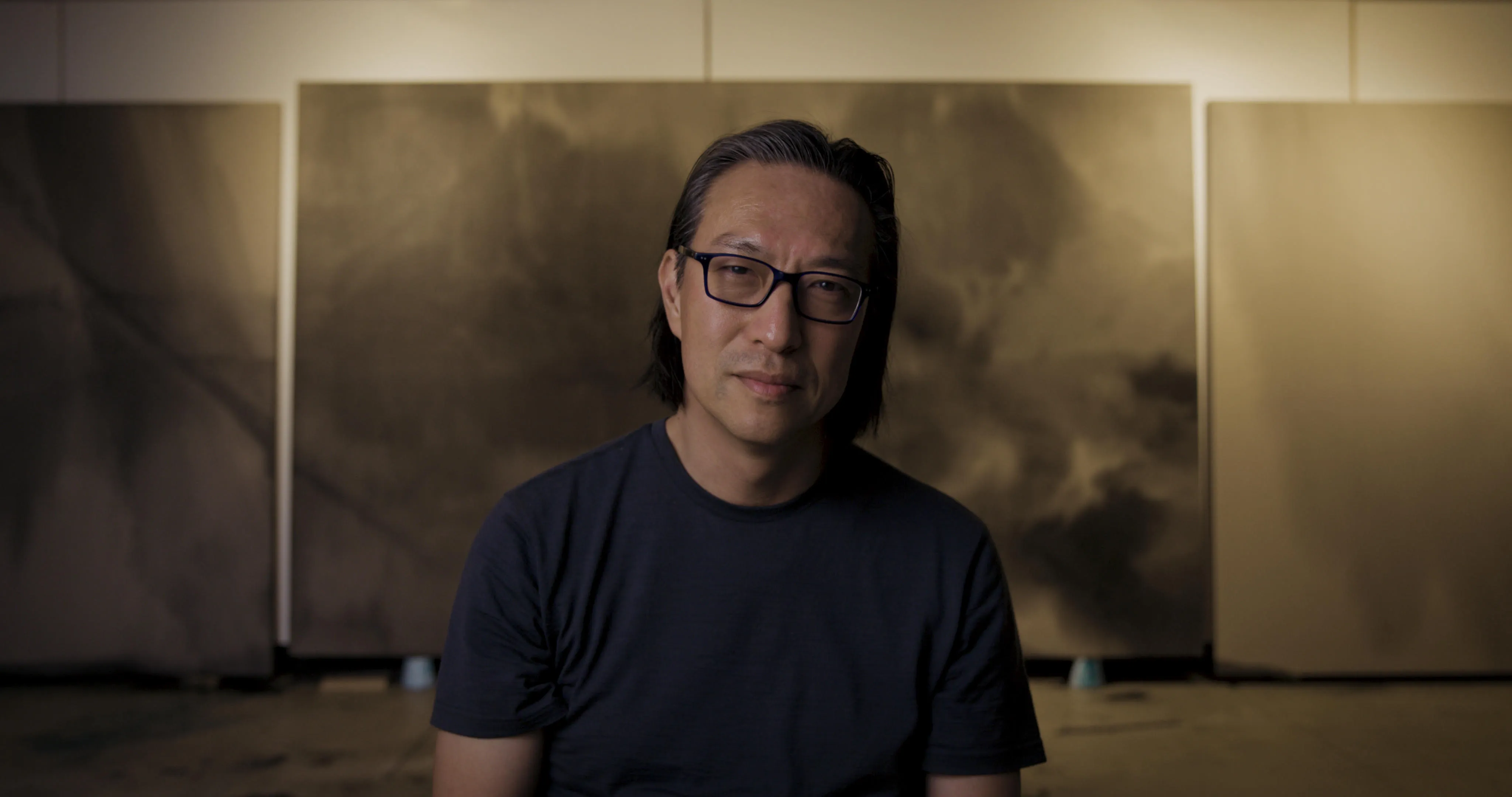
Jon Crabtree: And it seems to me from, [00:07:30] uh, from the viewers who are watching this, the perspective that there's a great illustration or two of them, right. Sitting beyond your shoulders and your own studio of works, that are being in the process of created.
Makoto Fujimura: Yeah. And these, these, uh, uh, monumental paintings called walking on water. And, uh, they were done last summer. I am releasing an album with a musician composer, Susie Ibarra, who compose music based on my previous [00:08:00] walking water, uh, paintings. And then, um, I responded with these paintings, um, and the album is being released this week. So in commemoration, I have it out as my zoom backdrop, uh, but the, these bad things with them, with minerals, uh, uh, Japanese, um, uh, method of painting from, uh, you know, 13th century on, they were using pulverized minerals. And, uh, so as right amount of [00:08:30] kite pulverized mixed with hand, uh, hand mixed with, uh, Japanese high glue. And, uh, it's a, water-based, uh, medium, and I'm literally painting on top of these paintings. So you're literally walking water. And, um, I S began the series after three 11, 2011 disaster in Japan, and as an allergy, the victims of the tsunami and earthquake there, but then with Susie [00:09:00] and I collaborating, we have began to expand that into, um, expressing the cries of our hearts and cries of nature at the same time. Um, and so walking water addresses, um, the crisis that we are experiencing, uh, with the pandemic of course, but, but also, uh, challenges that, that lay ahead, uh, with the environment with, um, you know, cultural wars, polarities, and, uh, [00:09:30] uh, issues that we are facing as a nation.
Jon Crabtree: Yeah. Diving in a little more, that one of the chapters that really hit me, I believe it's chapter three, was on the idea of beauty and mercy. And especially you juxtapose it in, uh, you juxtapose it next to Darwinian utility as, as a typical mindset in our post-industrial world. Could you expound on that a little bit?
Makoto Fujimura: Yeah. Um, I wrote a book called culture care. [00:10:00] Uh, two books prior to this and, and theology of making is a theology that culture care and cultural care is an antidote to culture wars idea of, uh, that we are in limited resource environments, and we have to fight our way, uh, to, uh, protect ourselves. Um, and you know, it's a scarcity model, um, of assumption, a huge assumption that we make when we say, well, the only thing we can do to protect [00:10:30] our values is, is to fight culture wars and demonize the other side. Um, when we don't realize how much of an assumption that is built in to a, uh, understanding of reality from the industrial realm, um, when you read the gospels, the beatitudes, uh, Jesus specifically actually addressed it, scarcity, mindsets, and fear and anxiety of his time. And, and those people living in a first century [00:11:00] , uh, would not be any better off than we are.
Makoto Fujimura: And, uh, perhaps facing, uh, scarcity, uh, uh, directly, uh, experiencing persecution and, and, and lack with protection. Um, and, and, you know, Jesus seems to tell them, uh, to consider the lilies of the fields, to look at the birds of the air, uh, blessed are the poor, um, and turning the paradigm upside down to [00:11:30] what he is doing to, uh, in my understanding is, is that he is invoking the abundance of creation that, that the creation narrative continues, even though we live in a foreign world where it is Darwinian, it is, it is a scarcity zero sum game. And yeah, the gospel is, is, is, uh, liberating us from a to the K to bring in this freedom of being a child of God, that, that, that is far more [00:12:00] abundant and extravagant and gratuitous than, than we realize. So I wrote culture care as, as a premise to try to, um, uh, persuade people that the best way to live out the gospel to, uh, live in the fruitfulness or the spirit fruit of the spirit lives, uh, generative life is, is, is to, um, assume God's abundance as Jesus tells [00:12:30] us in ceremonial about, um, and, and various other places.
Makoto Fujimura: And, and for us to recover our sense of making, um, that these two theology of making and why making is important is that by making, uh, artists notice, uh, firsthand, uh, the Christians are not, they, they have to assume that there's some level of abundance built into the system. So [00:13:00] they are assuming that by creating something new into the world, that not only they will feel connected to this newness, but that the entire production or entire, um, you know, um, music or poetry would, would resonate with, uh, people who, uh, battering the scarcity model and find something of a feast in, in their work. [00:13:30] Um, so what artists understand instinctively, what we need to understand in the church is, is that we are given this enormous promise of abundance and hope in Jesus Christ. And, and yet we don't live that way. We live as if we're still in the stone minium mode, uh, which is understandable because the world is built that way. And yet the promise of gospel tells us that this [00:14:00] counter-cultural way that we can be living that is a far, far more extravagant English tutors and, and filled with mercy and beauty than we can ever think, or imagine
Jon Crabtree: It, it strikes me that you were kind of ripe to understand and appreciate this parable of consuming that you write about as, as an expression of beauty and brokenness [00:14:30] and, and resurrection. And that was potentially the most touching chapter for me in your entire book, for those who don't know consuming, could you maybe explain that, bring into, uh, just an understanding of that as, as resurrection as a, as a picture of resurrection.
Makoto Fujimura: So a board like this, a table, um, that is, um, you know, uh, it's hard to get in other, there you go. Um, and, um, [00:15:00] you know, uh, expensive, uh, important T where, um, an auto T developed in, uh, it was refined in 16th century, Japan, and then became a model, a template for Japanese aesthetic. And, and then the tea ceremony, the tea masters, uh, when, when the tea, where we'll break and the families will hold onto the fragments for several generations before giving it to a Contiki master who [00:15:30] is a Japan lacquer master, uh, Japan lockers, Colucci, uh, and, um, the Japan lacquer master who manned the tea ware, but doesn't fix it, uh, you know, in the way that Western mindset will have, um, um, well, men that, uh, this part is fractured. So this was mended with, uh, Japan locker and then accentuates the fractures with gold.
Makoto Fujimura: And this, this bowl was done in a Kentucky academy [00:16:00] by a designer friend of mine Estiman, and she, uh, even added a little squiggle here, which is beautiful. And oftentimes, uh, Kenzie Massa we'll do that. We'll look at the fractures and say, how can I create a landscape? How can I create whatever from the fractures? So not hiding the flaws, uh, even amplifying the flaws in some way, but adding gold will mean that the resulting configurable is [00:16:30] more valuable than even the original. Uh, so it is literally in new creation and there's a long, um, uh, this course of this, uh, that I, I start in my, uh, other book called sinus and beauty, which was about, she was, again, those silence and Martin Scorsese's film, silence. Um, but it's around that time, 17th century, 16th century, Japan, and how Japanese aesthetic, uh, how it deals with imperfections rather than, [00:17:00] uh, perfecting beauty.
Makoto Fujimura: Uh, they talk about imperfect beauty as the ultimate way to understand what is beautiful. And, and that to me is very valuable today, uh, in, in a time when, uh, we have been through so much trauma, um, that these fractures that we have experienced, um, are common, you know, across the board, uh, that we share these, uh, the suffering [00:17:30] with so many people around the world and during this pandemic, and therefore the there's there's, you know, Japan lacquer connection between, uh, our wounding and, and, uh, strangers when they, um, connecting us and then generationally, um, you know, rather than move into the new normal, um, you know, go back to the normal, uh, as quickly as we can, we need [00:18:00] to understand that mending has to happen. And then perhaps these things that we experienced as hard as they may be, uh, an entry point into the new and, and something that we, as a community of followers of Christ, especially can value because Christ post-resurrection appearance includes the nail marks. Um, he, he doesn't become this, you know, uh, some, uh, angel [00:18:30] that disappears and, you know, wings, um, he walks through the walls into a domain and reveals his nail marks and his, his, his wounds. Um, and it is through his wounds that we are healed. And, and that means that, um, post resurrection reality, the new creation is linked to the wounding, um, even in, in our cases. Um, and in some way that [00:19:00] is exemplified and in Kentucky is true about nucleation.
Jon Crabtree: Wow. So, so the idea is rather than sending it back and receiving a brand new clone diversion or whatever you want to call it, what the theology of making is talking about is there are cracks, fissures wounds, but those are going to be filled and made more beautiful,
Makoto Fujimura: Made more beautiful by God. Somehow we don't understand [00:19:30] this, and we struggle with it nevertheless, but the practice of can Siggy that's help to rewire our brains to think differently about fractures.
Jon Crabtree: And even before the act or the art of consuming, you tell a story being in Japan of the holding this very old pottery been before. It's reminded that that was so it hits so home. Can you tell us more about that? Yeah,
Makoto Fujimura: So now [00:20:00] coming, uh, son, uh, the quince master, uh, was having us hold these really ancient, uh, pottery fragments. And, and he's, he asked us to just hold the, hold them there to hold on to a look at it. Um, and, uh, you know, he said something very profound, which I write in the book, um, that sometimes as a Kentucky master, you don't fix what you're working on. You just behold [00:20:30] and friend of mine, who is a pastor, um, uh, came with me to that trip and he just turned to me and he said, oh my goodness. You know, this is what the church should be preaching. Um, what if thought churches just instead of having programs to fix people, uh, at least first, you know, take time to be hold the fragments and, and to see that in itself is beautiful. And that practice [00:21:00] , uh, that, uh, considered master is clearly, he says, this is the highest form of contiguous is not to be considered, but hold onto the fractures and see it, imagine the whole, but, you know, even before you act on that impulse, you stop and appreciate the brokenness first. And, and then that, that in itself is beautiful. And that is enough, uh, for, for, uh, for conceding master, [00:21:30] uh, to be behold,
Jon Crabtree: That is very paradigm changing.
Makoto Fujimura: Yeah, yeah, yeah. For industrial mindset, you know, we, and, and we have bottom lines, right. We have numbers to meet. We have, you know, and, and, um, uh, that is so counterintuitive, uh, that, that, that it is, it is, it feels miraculous to even think this way. Um, but I, I, I've been thinking about this, especially during the pandemic, [00:22:00] you know, how we have to slow down how we have to, um, you know, we struggle with this so much, and yet it's an also an opportunity to look at fragments and look at the pieces. Uh, if we can do that, then this was my gift, um, as hard and traumatic as it has been.
Jon Crabtree: That's great. So this book and conversation overall, you mentioned it assumes that the new is breaking into the old broken earth, the new creation, [00:22:30] and what, what really was touching too, is that in the old and in the original creation, God uses physical materials from the earth to form man. Yes. Well, you talk about the Eucharist and how the theology of making shows up in the very act that many of us do every Saturday or Sunday, whenever it might be. Yeah. Tell us more.
Makoto Fujimura: Yeah. So bread and wine. [00:23:00] Um, my friend, Andy crouch was talking at a conference talking about how difficult it is to make bread and how difficult it is to make wine. And, and I was working on this book and it just occurred to me that, oh my goodness, you know, God instituted the central way for us to worship the resurrected Christ, um, sort of Eucharist and through means, um, in which we have to spend an almost amount of time trying to make bread and trying to make [00:23:30] wine. Uh, that's more than 10,000 hours, you know, I imagined and, and why, why didn't God just say, you know, something that's easier, um, you know, um, as a symbol of God's presence, um, and it, it really, um, undergoes Deanna's, you're making that God waits until we make to show up and God wants us to spend our hard labor, trying to make [00:24:00] something of excellence. And, and that, you know, is, is drinkable in, in order for God to say that they're in that process of discovering what is good and beautiful and true. Um, um, you know, that is what the tabernacle, the new, uh, tabernacle is based on this, you know, this image of Christ appearing, [00:24:30] uh, does not happen just automatically from natural means. Uh, it happens only when we invest our time. And so perhaps generations into making something, and then God says, you know, through the table, um, I will be present with you.
Jon Crabtree: Wow. We're, we're going to have, uh, quite a few listeners who are creatives at churches [00:25:00] that are going to be encouraged by this. Yeah. Maybe to, maybe to land the plane. We, we make, uh, a, almost a digital canvas for churches to do everything from media to giving, to communicating with each other. And we do see, uh, one of the things that connected me with your book so much is that I'm at a company that sees ourselves in kind of the, the, I think it's the second Kings where Solomon's building the temple to the craftsmen for the Lord. And that's also [00:25:30] in the, um, the Pentateuch as well, constructing the tabernacle. Yes. You build and, or, sorry, you make art that deepens people's experience with scripture. We make, um, we make digital products that, that help them also experience scripture. I think there's something, uh, coming down, down the pipeline from you. That's also gonna take a while, but it's going to be deepening people's experience around scripture with art. Can you tell us more about that? [00:26:00] Yeah. I,
Makoto Fujimura: I mean, I have always thought of art as prayer, and even before I knew myself to be a follower of Christ, you know, and it was felt there was, I was called to do, do what I do, and that nobody, you know, would, would say that you should do this. So, you know, oftentimes for artists experiences that everybody says, don't do it, you know, and then, but you have this internal [00:26:30] compass that, that cannot be denied. And, and that's, that's when you kind of surrender to it and you say, okay, I'm called to this. Um, and, and I'm going to have to try, even if I don't make it that at least I've, you know, honor the instinct. And that's how I always felt that art was intrinsically connected to a deeper spirituality and worship. Um, [00:27:00] the studio here is the most sacred place that I feel at home, um, uh, in, you know, in order to create, uh, as, as challenging as creating something new is, and, and it is hard work, but there's nothing more that validates for me, the presence of God, uh, in, in that process.
Makoto Fujimura: And, and so I, I think, I think you're right, I think there is something [00:27:30] , uh, that we don't even know how to, you know, how to, um, but what is around, um, that connects all these pieces that, uh, for, for ages have been, uh, you know, how, how have been putting into the separate categories, uh, technology and so forth, uh, that is coming together, uh, right now. And, and, um, especially I think because of the pandemic, it has [00:28:00] accelerated that, that, you know, our churches were forced to, uh, worship through zoom and, and so forth. And, and now we have this amazing opportunity to, uh, you know, craft a new way of looking at the temple. Um, you know, [inaudible] exit 31 is given a strict instruction, uh, along with the DECA log, by the way. But most people don't realize, like these [00:28:30] were two things that were given to the Israelites very early on.
Makoto Fujimura: Uh, we talk about the Decalogue all the time, but simultaneously the design of the tabernacle, Moses with mercy, see then, and, and basically this, uh, worship box, you know, a nomadic worship, uh, box that, that allow the Israelites to have identity. Um, and, and we don't necessarily think of that. They, uh, party because Christ is the tabernacle. [00:29:00] Um, but the, you know, the post resurrection journey, uh, involves us actually having a physical experience, you know, Peter ate fish with Jesus. And so that means that physicality matters in the new creation, um, and in ways that we don't fully understand. And I, and as I, as I, you know, think about technology, and I think about advancements, the sciences, which my father dedicated [00:29:30] his life to, I have to say that, you know, God being in control has created something that, that is just fantastically integrated, uh, through these technology that's been developed.
Makoto Fujimura: Um, and, and, you know, it's up to the creators and the body of Christ to really, um, uh, uh, complete the picture in a way, because, um, you know, we, we have the paradigm, [00:30:00] uh, in the gospel, uh, in, in how we understand reality with a capital law that people outside of faith do not have, uh, people outside of faith can still create good things and beautiful things and true things, but it's only the Christians who have the discernment to see why that is. So, uh, fantastic. So, so, so I go around like, you know, uh, artists [00:30:30] , um, you know, backstage of theater, I say, you know, thank you so much for doing what you do, because to me, you're voicing creation's praise. You know, I, I use those terms and, and as a follower of Christ, I see the nucleation in you and in a person maybe, you know, completely an atheist, you know, outside of church.
Makoto Fujimura: But I had these incredible conversations with people because they know [00:31:00] that they know that instinctively inside, they may be fighting against it, and they may have run away from it, but they know something inside. It resonates with that. And I think technology is the same way. I think we can, we can begin to understand this collaborative in community. And, and when that comes together with, with of course, live events and, and, you know, real bread and real wine, you know, um, it's going to be the most powerful, uh, way that we can [00:31:30] , uh, we can communicate this abundance of God, you know, beauty of God that is extravagant and abundance. And, and so that, that's, I think that's what, uh, we are headed to. So I'm, I'm grateful this conversation,
Jon Crabtree: Me too, Mako, it's been such a pleasure. And, uh, can you tell people where they can find you both on the internet, social media, that sort of thing.
Makoto Fujimura: Yeah. So I am easy to find, just look up by name and they, you know, it's thanks to my daughter, uh, who got me on [00:32:00] Twitter very early on and Instagram. Uh, I am on both, both of those and the, I am Fujimura and, uh, I called tofu, Gemara is my full name. And if you look that up, uh, you, you see, um, a fantastic website designed by my son who runs a web design company called cantilever. And, uh, he was, uh, I, I was one of the first artists to have a website, um, and, uh, he kind of, you know, that into the [00:32:30] spell and, and became a web designer himself. And, and so, um, he's, he is, uh, um, the more, more of a code person. So he thinks analytically about how to make things beautiful, uh, by coding. And, uh, but, but so you can, you can find me in those venues.
Jon Crabtree: Awesome. Well to our viewers and listeners, thanks so much for joining us today. Uh, I I'm sure Mako will join me in, in the exhortation to go co-create [00:33:00] the new creation, and we'll see you next time.
VO: Thanks for tuning in to equip and engage where we're sharing insights learned from thousands of conversations with leaders and pastors around the world to follow along with these conversations, subscribe today, or visit our website.


© 2026 Subsplash